• Skip to content

Grégoire Canlorbe

Uncategorized

A conversation with Yuri I. Ozhigov, for European Scientist

A conversation with Yuri I. Ozhigov, for European Scientist

by Grégoire Canlorbe · Jan 20, 2020

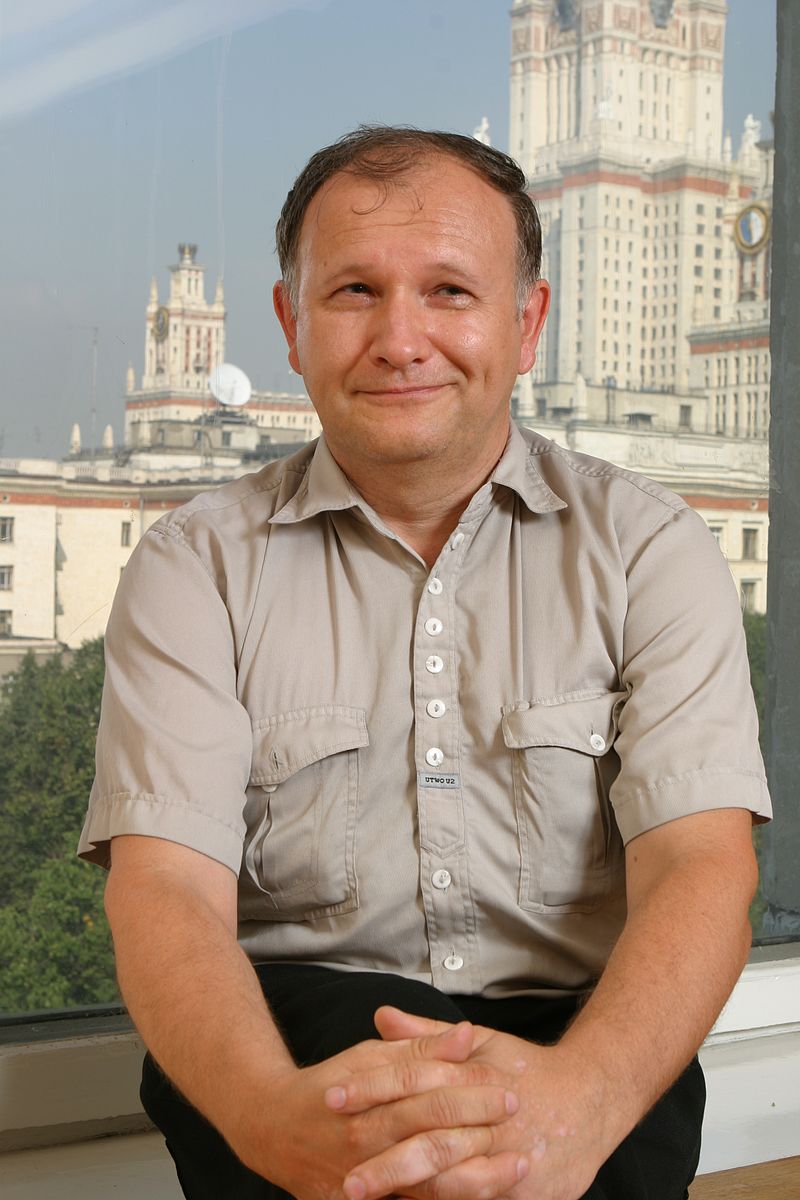
Ozhigov_Yurij_1980+  Yuri I. Ozhigov is Professor, Chair of Quantum Informatics, Faculty VMK, Moscow State University and author of Constructive Physics. This conversation was first published on European Scientist, in January 2020.
  Grégoire Canlorbe: Your theoretical insights in quantum physics emerged both in the light of the constructive branch of mathematics and in the one of what you call “the method of collective behavior.” How do you sum up your vision—and what it owes to those two influences?

  Yuri I. Ozhigov: Analysis of infinitesimals is the “sacred cow” of natural science. And it works fine, but only when the particles are identical in one sense or another. This is the basis for modern instrumentation. But in a living thing all particles are different. You can’t rearrange nucleotide bases in a DNA molecule. Living is not amenable to mathematical analysis, here we need a quantum computer. But even in creating this unprecedented device, traditional analytical methods of physics failed. Constructive mathematics is an actual alternative to analysis. In it, fixing the resolution grain has a special meaning, and algorithms come to the fore.

  This point of view is not shared by the majority, but it is much more consistent with reality than the traditional analytical approach. The behavior of the air in the room where you sit, strictly speaking, does not obey the Navier-Stokes equation, because you can not direct the spatial step to zero: if it becomes less than a nanometer, it will be impossible to determine the air density or air impulse at a point, because such a cube will either get one molecule, or nothing at all. Here we need a method that I conventionally called collective behavior. In a normal situation with air in a room, you can ignore this, but if it was not about air, but about a bacterium, it is impossible to ignore the discreteness of the world.

[Read more…] about A conversation with Yuri I. Ozhigov, for European Scientist

Filed Under: Uncategorized Tagged With: administrative time, Albert Einstein, biological quantum computer, Grégoire Canlorbe, Richard Feynman, time dilation, Yuri I. Ozhigov

A conversation with Joachim Son-Forget, for Gatestone Institute

A conversation with Joachim Son-Forget, for Gatestone Institute

by Grégoire Canlorbe · Déc 27, 2019

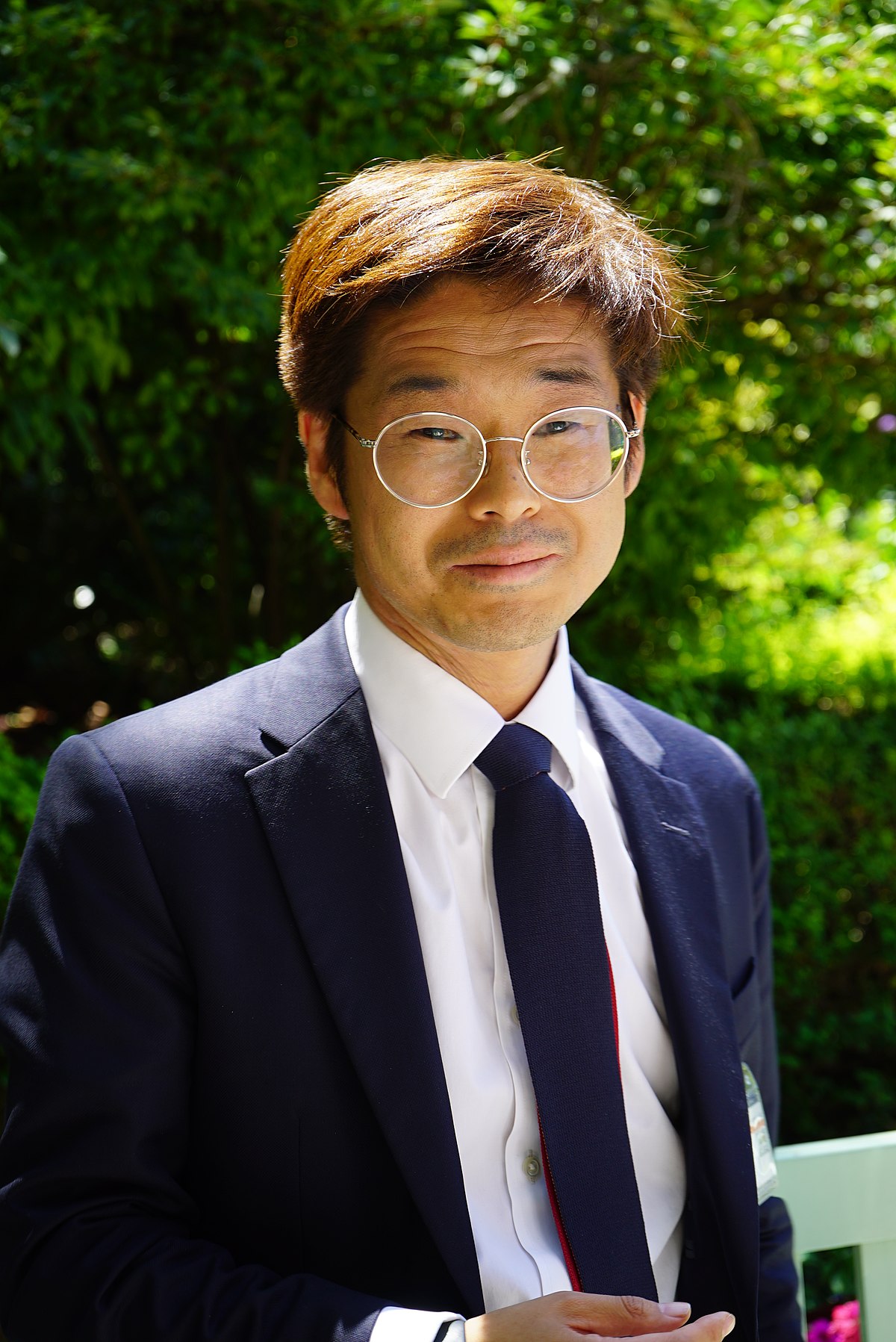
1200px-Joachim_Son-Forget_16312  Joachim Jean-Marie Forget, also known as Joachim Son-Forget, is a South Korean-born, French politician and professional radiologist. Since 2017, he has been a member of the French National Assembly (lower house of the French Parliament) representing French residents overseas. He works part-time as a radiologist in Switzerland. He has held Kosovar citizenship since 2018. Adopted by a French family as a child, and holder of a doctorate in cognitive neuroscience, Son-Forget was previously active within the French Socialist Party and later La République En Marche (LaREM) until he resigned from the party in late 2018. He has since founded his own political party, first called “Je suis français et européen” (JSFee), then “Valeur absolue.”


  The following conversation with political journalist Grégoire Canlorbe happened in December 2019, in Paris. An abridged version was first published by Gatestone Institute, in December 2019.

  Grégoire Canlorbe: You are known for your stormy positions, for example on ART [assisted reproductive technology]. Do you espouse Julie Graziani’s polemical claim that (in substance) it is better not to divorce for a woman who lives on minimum wage, knowing that everyone, rich or poor, must shoulder its responsibilities?

  Joachim Son-Forget: My point about ART is different from that of pro-life parties, in that it does not carry a desire to discriminate against homosexual people who would like to educate a child. I only notice that nature has made that two men together or two women together cannot give life, and I think we should have the wisdom to respect nature in that case. Certainly we were able—thankfully!—to go beyond nature in various fields: thanks to modern medicine, infant mortality has become practically insignificant in the West (whereas before the nineteenth century, one child in four died before the age of one, and one child in two reached the age of ten). Technical progress has given us opportunities for transportation and communication that were inconceivable for our ancestors. But all of that is out of proportion with the fact of wanting to go beyond nature in the field of gestation. It is a barrier that it would be unwise to cross… were it only out of regard for the existential questions of children born through surrogacy.

  Once again, there is no homophobic discrimination in my speech: I cannot find fault with entrusting orphans to homosexual couples, on the contrary! Regarding Julie Graziani, whom I do not know, and whom I believe is absolutely unknown in France beyond a meager buzz already forgotten, I usually try to look up, and to comment, if not renowned thinkers, at least people who are somewhat existing. So expressing myself about what the housewife of the neighborhood thinks (perhaps her opinion is, in fact, more valid than that of that lady), no I wouldn’t do that! Now, to answer you on the subject matter: family is indeed the traditional economic model of survival in a precarious situation. For those who are penniless, and who live in the anxiety of a blackout or a banking ban, getting married was—and could still be—the opportunity to found a tribe whose members will provide for the needs from each other and will bring assistance, comfort and solidarity to each other. In a world subject to biological or social determinisms like ours, it is a bit illusory to call people to “shoulder their responsibilities.” Epigenetics teaches us how acquired traits such as violence can be rendered heritable (via the messenger RNA game). Certainly education can, in part, remedy determinism just like the eviction of deleterious conditions… at least I like to think it to keep a bit of utopia to move forward.

[Read more…] about A conversation with Joachim Son-Forget, for Gatestone Institute

Filed Under: Uncategorized Tagged With: Claude Lévi-Strauss, Donald Trump, epigenetics, Grégoire Canlorbe, Japan, Joachim Son-Forget, Julie Graziani, Korean genetics, Maoist China, Mullahs' Iran, North Korea, Park Chung-hee, South Korea

A conversation with Susan J. Crockford, for Association des climato-réalistes

A conversation with Susan J. Crockford, for Association des climato-réalistes

by Grégoire Canlorbe · Déc 15, 2019

maxresdefault-2  Susan Janet Crockford is a Canadian zoologist, author, and blogger specializing in Holocene mammals. From 2004 to 2019 she was an adjunct professor in Anthropology at the University of Victoria. She is best known for her blog posts on polar bear biology, which oppose the scientific consensus that polar bears are threatened by ongoing climate change. In October 2019 she was interviewed by Grégoire Canlorbe—on behalf of the Association des climato-réalistes, the only climate-realist organization in France. The English version was first published on Friends of Science, in December 2019.

  Susan J. Crockford: I live in Victoria, British Columbia, and I specialize in animals from the late Pleistocene, so probably the last fifteen to twenty thousand years. I have a contract company called Pacific Identifications Inc. We identify animal bones from archaeological projects and also from biological research: stomach contents, fecal samples, that kind of thing. That’s primarily how I get my income. And then, I am also a former adjunct professor at the university—I had held that position since 2004 but in 2019, it was not renewed.

  My primary interest—my overall interest—is evolution. That, for me, really informs everything. It’s the big picture. Evolution is the big idea that drives all my interest. For example, the interesting thing is that a deer bone from 8000 years ago looks like one living today, and so, there is continuity. But there are also distinctions—when you get species differences, those are apparent. I became interested in polar bears when I was working on the topic leading up to my PhD dissertation. I was looking at the speciation process that turns a wolf into a dog (what we also call domestication). While trying to unravel what biological process drives that transformation, the wild species that I looked at to compare it to was the brown bear to polar bear transformation. So, I’ve been looking at the literature on polar bears (their life history, their ecology, and the geological history of sea ice) since the 1990s. I’ve been investigating polar bears for quite a while.

  Grégoire Canlorbe: Your most decisive feat of arms in evolutionary biology may be your claim that thyroid rhythms alone are responsible for all significant differences in life history traits. Could you remind us of the outlines of your approach?

   Susan J. Crockford: I don’t actually claim that thyroid rhythms alone drive evolution, although I suspect it may be the dominant driver in many cases. What really drives evolution is individual variation. So, within a species, animals are all different in some critical ways. And the primary hypothesis that most biologists go by is that those individual differences are primarily genetic: that genes are what controls those critical differences, and, therefore, genes, or genetic change, is what drives speciation change in evolution.

[Read more…] about A conversation with Susan J. Crockford, for Association des climato-réalistes

Filed Under: Uncategorized Tagged With: brown bear, climate activism, climate change, Grégoire Canlorbe, K selection theory, polar bear, sea ice, Susan J. Crockford, Willie Soon

A conversation with Heiner Rindermann, for Man and the Economy

A conversation with Heiner Rindermann, for Man and the Economy

by Grégoire Canlorbe · Nov 28, 2019

hrin_2019  Heiner Rindermann PhD, is Professor of Educational and Developmental Psychology at the Technical University of Chemnitz (Germany). He is psychologist (PhD University of Heidelberg). His work deals with education and ability development, intelligence and student achievement, economy and politics, evolution and culture, and their interplay at the level of individuals and societies. His recent major contribution is Cognitive capitalism: Human capital and the wellbeing of nations published in 2018 by Cambridge University Press.

  Grégoire Canlorbe: An early contribution on your part in establishing the connection between cognitive ability and human development (in the broadest sense) was to show how the spread of AIDS among ethnicities of different continents is greater as the cognitive ability is lower. Could you remind us of your analysis?

  Heiner Rindermann: In two publications from 2007 and 2009 with my German colleagues Georg W. Oesterdiekhoff, a sociologist, and Gerhard Meisenberg, a biologist, I showed that education (as a proxy for intelligence and knowledge) and cognitive ability (comprising intelligence and knowledge) reduce the impact of the HIV spread.[i] If wealth and modernity are added in analyses at the level of nations – comparing different countries – the effects of wealth and modernity even turned positive, increasing HIV rates! Disproving the usual theory, that AIDS is a disease of the poor, the data robustly showed that AIDS is a disease of the low intelligent. But why? Isn’t this result biased or mad?

  In closer consideration not at all: Studies from other authors on AIDS or on diabetes at the level of individuals also show that income and even education are not crucial for health. The crucial factor is intelligence. Again: Why? Here the Piagetian approach can help us as used by Georg W. Oesterdiekhoff and cognitive hermeneutics of everyday life as I tried to explain in my Cognitive capitalism book: People at lower levels of cognitive development and intelligence, especially if living in a social environment with a similar low level, tend to think and act irrationally, e.g. they believe in magic and behave in ineffective or even self-damaging ways. I.e., AIDS is not seen as being caused by HIV transmitted by unprotected sex but being caused by God, magical powers or sorcery and consequently can be cured by magical treatment, e.g. by having sex with a virgin. And these aren’t excuses for sexual abuse or own failings but people really believe this.

  For instance, a quote from a study by African researchers in Mali underscores this: “Accidents are never attributed to faults or incompetence of the people in charge or machine failure, they are always orchestrated by certain superstitious powers.”[ii] Such a mindset will not lead to more cautiousness or better maintenance reducing accidents.

[Read more…] about A conversation with Heiner Rindermann, for Man and the Economy

Filed Under: Uncategorized Tagged With: Adam Smith, AIDS, Anatoly Karlin, China, Deirdre McCloskey, division of labor, education, Edward Dutton, eugenics, Flynn effect, Gerhard Meisenberg, Grégoire Canlorbe, Heiner Rindermann, HIV, Karl Marx, race differences in intelligence, Ricardian law of comparative advantages, Russia, Satoshi Kanazawa, Woodley effect

A conversation with Davide Piffer, for American Renaissance

A conversation with Davide Piffer, for American Renaissance

by Grégoire Canlorbe · Nov 9, 2019

laurea   Davide Piffer is an evolutionary anthropologist. He obtained his BA in Anthropology from the University of Bologna and a Master of Science in Evolutionary Anthropology from Durham University. His Master’s thesis was on the sexual selection of sleep patterns among humans, and was the first to link mating behavior to chronotype within an evolutionary framework. His research effort later moved to quantitative genetics (i.e. twin studies), when he published one of the first accounts on the heritability of creative achievement. In 2013 he moved to molecular genetics, focusing on the polygenic evolution of educational abilities and intelligence and this is still his main focus. Within this research area, his main finding is that ethnic differences in intelligence are explained by thousands of genetic variants that predict cognitive abilities within populations. He has published a book of poems.

  Grégoire Canlorbe: You have made a well-known attempt to provide a theoretical framework within which creativity—in science, philosophy, technology, music, mathematics, or literature—may be defined more precisely and measured. Could you present us your theory as it stands?

  Davide Piffer: Creativity is not a single cognitive function or ability. Hence, it is not possible to measure creativity with paper and pencil or computer tests, unlike for example intelligence, or working memory. Creativity is the capacity to generate creative products, that is, scientific theories, poems, paintings, sculptures, inventions that are novel and useful or meaningful. Hence, the only way to measure a person’s creativity is via one’s creativity output (i.e. achievement) which is the sum of creative products over an individual’s (or society/ race) lifespan. A lot of cognitive abilities contribute to creativity, and in my seminal paper (Piffer, 2012), I argued that the widespread use by researchers of divergent thinking as the sole measure of creativity is a mistake. In fact, there are many cognitive and personality predictors of creative achievement besides divergent thinking, including IQ or general mental ability, working memory, openness to experience and non-clinical schizophrenic tendencies (i.e. “shizotypy” to use the psychiatrist’s jargon). Hypomania, or the tendency to feel positive emotions, has been linked to creativity, as well as bipolar disorder. All of these factors constitute what I call “cognitive potential”.

  Divergent thinking (DT) is actually an important cognitive function which has been confined to creativity research. However it would benefit other areas of psychology as well. My opinion is that it would be better to regard DT as a form of intelligence, and to include divergent thinking measures in psychometric batteries and standardized intelligence tests (i.e. WAIS). Since psychometrically it is correlated to general cognitive ability but it taps into different neurological substrates, it would provide a more complete picture of one’s mental power, possibly less tied to academic intelligence and more to artistic or daily-life accomplishments.

[Read more…] about A conversation with Davide Piffer, for American Renaissance

Filed Under: Uncategorized Tagged With: Ariosto, clairvoyance, creativity, Davide Piffer, dysgenic fertility, fluid intelligence, Galilei, Grégoire Canlorbe, Italy, Leonardo da Vinci, poetry, proto-Indo-European people, race differences in ethnocentrism, race differences in intelligence, Richard Lynn, sleep patterns, Tasso, voice maturation

A short conversation with James Flynn, for European Scientist

A short conversation with James Flynn, for European Scientist

by Grégoire Canlorbe · Oct 29, 2019

  maxresdefaultJames Robert Flynn is a political philosopher and an intelligence researcher based in New Zealand. He is most famous for his publications about the continued year-after-year increase of IQ scores throughout the world, which is now referred to as the Flynn Effect. His last manuscript, entitled “In Defense of Free Speech: The University as Censor,” and initially scheduled for publication in September 2019, was withdrawn by its own publisher.

  Grégoire Canlorbe: Besides your inquiries in intelligence research, you got involved in the exegesis of Aristotle’s philosophy… your very first published book developing “an Aristotelian view” on ideology in politics. What does your current polemical case for free speech owe to this Aristotelian background?

  James Flynn: I believe that I would defend free speech my debt to Aristotle aside. Any censorship turns what should be a contest of ideas into a test of strength—who has the power to shut their opponent up—and “might makes right” is hardly a principle that will maximize truth. But Aristotle was well aware that dialogue rather than authority was the proper method. He said: “Plato was a friend to us all, but an even better friend must be the truth.”

  Grégoire Canlorbe: While Aristotle’s pre-scientific physics attested to a kind of intelligence more empirical than imaginative, and more qualitative than measurement-oriented, Galilei’s intellect would exhibit qualities of speculation and inspiration, and mathematical and logico-experimental aptitudes, from which modern, properly scientific physics would spring. How would those two distinct sorts of intelligence translate into a contemporary IQ test?

  James Flynn: The current IQ tests are culturally relative in the sense that they try to measure skills appropriate in a modern scientific society. Look at the subtests of the Wechsler IQ test: (1) Vocabulary measures when you have a command of the language of a school-educated person; (2) Similarities measures whether you can use abstractions to classify and generalize as scientists do; (3) Arithmetic measures whether you are numerate; (4) Digit span measures whether you have a working memory for numbers; (5) Coding measures whether you note correlations between two systems of identification.

[Read more…] about A short conversation with James Flynn, for European Scientist

Filed Under: Uncategorized Tagged With: Aristotle, average IQ, China, Flynn effect, g factor, Grégoire Canlorbe, James Flynn, New Zealand

A conversation with Richard Storey, for The Council of European Canadians

A conversation with Richard Storey, for The Council of European Canadians

by Grégoire Canlorbe · Sep 17, 2019

2gsjgnRrABUb4zYhgrB2BPEdMRNiHnWu8cSAeH6Pk1prKVACUsqDy9xYCGfpGpThi4tJo1w5Fq4Bi7VpwdSVdyfCyL3bggPDkvzzsdJmJVXKggXiCe  Richard Storey LL.M is a Catholic traditionalist, sometimes described as a medieval libertarian. His writing spans law, history, theology, and cultural criticism, and he is the author of The Uniqueness of Western Law: A Reactionary Manifesto. He lives in England with his wife and three children.

  Grégoire Canlorbe: Ayn Rand’s notion that scientific racism is the worst form of collectivism has virtually reached the whole libertarian spectrum. How do you conciliate libertarian individualism and race consciousness?

  Richard Storey: Well, at once we need to first understand what we mean by libertarian. Most libertarians would believe they are libertarians because they are Austrian economists or because they are extremely individualistic, I would say, “hyper-individualistic”. That is not libertarianism. Libertarianism is only a theory of law, that’s it. What kind of law is that?  Well, it is the rule of law – a deontological theory of law. The law rules above everyone. The law is king of kings, if you want to put it that way. And so I think most libertarians do not even understand what the word means themselves.

  So, where does this more modern, secular libertarianism, which we are more familiar with, come from? It emerged from an Anglo-liberal, classical liberal background, inspired by figures like John Locke. It is very individualistic, of course, as anyone with a passing knowledge of Ayn Rand can see full well. And yet, even figures like Murray Rothbard, Jeff Deist, who is of course the current President of the Mises Institute, recognize and speak very openly about the necessity of family and of the groups into which we are born; they speak about culture, they speak about religion, and of course nationality – your territorial, ethnic group if you like. That is something you are born into as much as your family, your immediate family. Or at least it used to be.

  Of course, in cities, in the artificial environments we have been created for the past 2000 years, the situation is very different. Your family, or what you might call your family might just be a group of loose friends that you have, maybe who you meet at the café, or some people you see at work and, really, you do not have a great deal of interaction in your community, in your neighbourhood. So, many libertarians are now realising, through my writings, those of Frank van Dun and Hans-Hermann Hoppe, that the former intermediary institutions and communities between the individual and the state, which formed medieval society, were essential in preventing the rise of centralised, coercive states among European civilisations.

[Read more…] about A conversation with Richard Storey, for The Council of European Canadians

Filed Under: Uncategorized Tagged With: Benedict XVI, Dante Alighieri, ethno-masochism, Grégoire Canlorbe, Hans Hermann Hoppe, Indo-European tradition, libertarianism, Ludwig von Mises, proto-Indo-European people, Richard Lynn, Richard Storey, Robert Ardrey, traditional Catholicism

« Previous Page
Next Page »

Copyright © 2025 · No Sidebar Pro on Genesis Framework · WordPress · Log in

  • Information
  • Privacy policy