
 Susan Janet Crockford is a Canadian zoologist, author, and blogger specializing in Holocene mammals. From 2004 to 2019 she was an adjunct professor in Anthropology at the University of Victoria. She is best known for her blog posts on polar bear biology, which oppose the scientific consensus that polar bears are threatened by ongoing climate change. In October 2019 she was interviewed by Grégoire Canlorbe—on behalf of the Association des climato-réalistes, the only climate-realist organization in France. The English version was first published on Friends of Science, in December 2019.
Susan J. Crockford: I live in Victoria, British Columbia, and I specialize in animals from the late Pleistocene, so probably the last fifteen to twenty thousand years. I have a contract company called Pacific Identifications Inc. We identify animal bones from archaeological projects and also from biological research: stomach contents, fecal samples, that kind of thing. That’s primarily how I get my income. And then, I am also a former adjunct professor at the university—I had held that position since 2004 but in 2019, it was not renewed.
My primary interest—my overall interest—is evolution. That, for me, really informs everything. It’s the big picture. Evolution is the big idea that drives all my interest. For example, the interesting thing is that a deer bone from 8000 years ago looks like one living today, and so, there is continuity. But there are also distinctions—when you get species differences, those are apparent. I became interested in polar bears when I was working on the topic leading up to my PhD dissertation. I was looking at the speciation process that turns a wolf into a dog (what we also call domestication). While trying to unravel what biological process drives that transformation, the wild species that I looked at to compare it to was the brown bear to polar bear transformation. So, I’ve been looking at the literature on polar bears (their life history, their ecology, and the geological history of sea ice) since the 1990s. I’ve been investigating polar bears for quite a while.
Grégoire Canlorbe: Your most decisive feat of arms in evolutionary biology may be your claim that thyroid rhythms alone are responsible for all significant differences in life history traits. Could you remind us of the outlines of your approach?
Susan J. Crockford: I don’t actually claim that thyroid rhythms alone drive evolution, although I suspect it may be the dominant driver in many cases. What really drives evolution is individual variation. So, within a species, animals are all different in some critical ways. And the primary hypothesis that most biologists go by is that those individual differences are primarily genetic: that genes are what controls those critical differences, and, therefore, genes, or genetic change, is what drives speciation change in evolution.
[Read more…] about A conversation with Susan J. Crockford, for Association des climato-réalistes

 Heiner Rindermann PhD, is Professor of Educational and Developmental Psychology at the Technical University of Chemnitz (Germany). He is psychologist (PhD University of Heidelberg). His work deals with education and ability development, intelligence and student achievement, economy and politics, evolution and culture, and their interplay at the level of individuals and societies. His recent major contribution is Cognitive capitalism: Human capital and the wellbeing of nations published in 2018 by Cambridge University Press.
 Davide Piffer is an evolutionary anthropologist. He obtained his BA in Anthropology from the University of Bologna and a Master of Science in Evolutionary Anthropology from Durham University. His Master’s thesis was on the sexual selection of sleep patterns among humans, and was the first to link mating behavior to chronotype within an evolutionary framework. His research effort later moved to quantitative genetics (i.e. twin studies), when he published one of the first accounts on the heritability of creative achievement. In 2013 he moved to molecular genetics, focusing on the polygenic evolution of educational abilities and intelligence and this is still his main focus. Within this research area, his main finding is that ethnic differences in intelligence are explained by thousands of genetic variants that predict cognitive abilities within populations. He has published a book of poems.
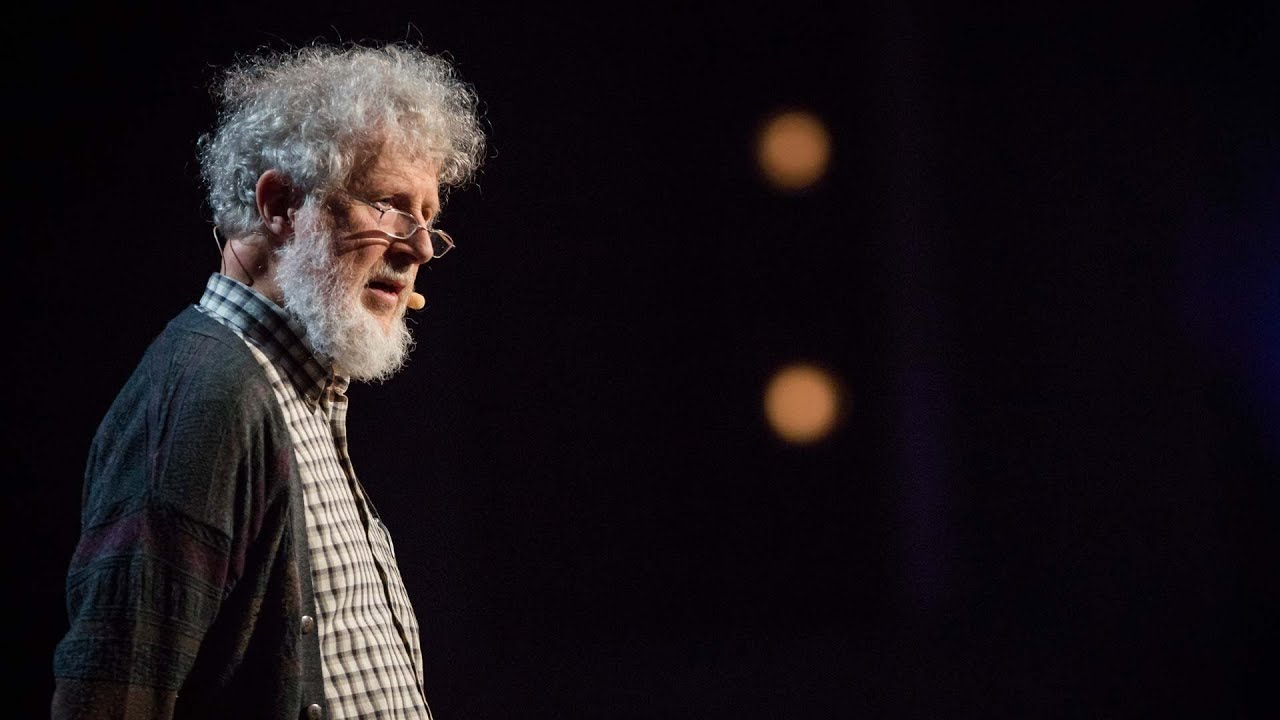
 James Robert Flynn is a political philosopher and an intelligence researcher based in New Zealand. He is most famous for his publications about the continued year-after-year increase of IQ scores throughout the world, which is now referred to as the Flynn Effect. His last manuscript, entitled “In Defense of Free Speech: The University as Censor,” and initially scheduled for publication in September 2019, was
 Richard Storey LL.M is a Catholic traditionalist, sometimes described as a medieval libertarian. His writing spans law, history, theology, and cultural criticism, and he is the author of The Uniqueness of Western Law: A Reactionary Manifesto. He lives in England with his wife and three children.

 Laurent Alexandre is a French surgeon-urologist, essayist, and entrepreneur. The founder of the Doctissimo website, he is interested in the transhumanist movement and in the upheavals that humanity could experience, along with the progress of science in the field of biotechnology. His