• Skip to content

Grégoire Canlorbe

Aristotle

A conversation with Robert Spencer

A conversation with Robert Spencer

by Grégoire Canlorbe · Sep 29, 2026

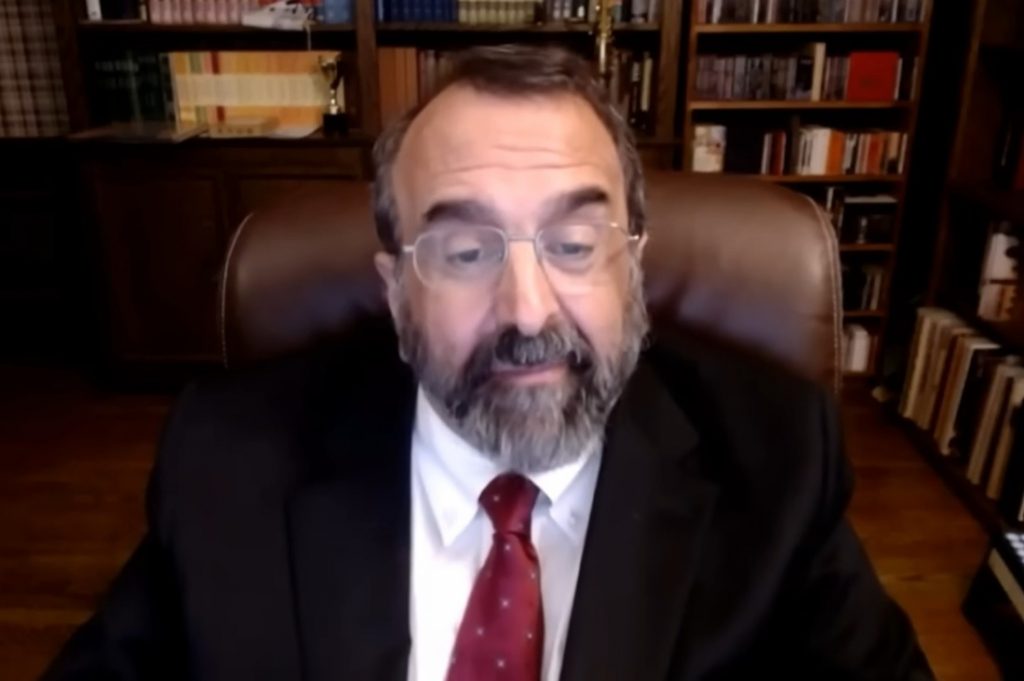
Robert Spencer. (Image source: Jihad Watch YouTube channel)

  Robert Spencer is a Christian American scholar writing on topics including Islam, Orthodoxy, and the Byzantine Empire. The director of Jihad Watch, he is a Shillman Fellow at the David Horowitz Freedom Center. He has led seminars on Islam and jihad for organizations including the FBI, the United States Central Command, and the U.S. intelligence community.

  Grégoire Canlorbe: Please tell us about the different ways of jihad. What is the extent of their work in the U.S and elsewhere ?

  Robert Spencer: There are many forms of jihad. Besides armed jihad, there is jihad of the tongue, jihad of the pen, jihad of the pocketbook and many more. The goal of all of them is to destroy the existing order of non-Muslim states and replace that order with the hegemony of Sharia.

Stealth jihad—including the efforts of Muslim Brotherhood-linked organizations to gain political power by winning electoral offices at all levels[i] as well as attaining influential positions within various government agencies—is quite advanced in the U.S. The entire American left has been knocking itself out enabling and aiding the expansion of Muslim political power, without realizing or caring that it is supporting a radically intolerant and supremacist ideology. In Europe, this process is already even farther advanced due to the high level of Muslim migration, which could lead to civil war, as well as, demographically, to Islamic states on the continent—and in Great Britain—before the end of this century. Russia is not exempt from this replacement, but currently has fewer Muslims, and is therefore less Islamized.

  Canlorbe: How do you assess the future of America, which was founded as a Christian nation?

  Spencer: America has, to a much lesser extent than Europe but nevertheless unmistakably, cast off its Christian heritage to a tremendous degree. The popular culture, educational system and mass media are actively anti-Christian, and have managed a large-scale transformation of public attitudes and beliefs over the last half-century. This has created a vacuum which Islam is eager to fill, as it is doing in Europe. We see in particular the proliferation of churches being bought and transformed into mosques, with Muslims boasting of this achievement in the UK and elsewhere. Muslims in general prefer this method to building new buildings: the transformation of a church into a mosque is for them a visible manifestation of Islam’s victory, superiority over Christianity, and coming hegemony. There is also the sharp increase in the desecration of Christian religious art, and the mysterious and as yet unexplained burning of an ever-increasing number of churches all over Europe and North America.

  Canlorbe: You write about the Byzantine civilization and how it preserved the legacy of Athens, Rome, and Jerusalem. What were those values it inherited? How did they contribute to making the Byzantine world so different both from the Islamic civilization, and from Catholic Europe?

  Spencer: The Byzantines, who always referred to themselves simply as Romans and believed they were simply Romans living in the Roman Empire, were responsible—not the Muslims, as is commonly claimed—for preserving the classics of ancient pre-Christian Greek literature. These writings were the foundation of the Byzantine curriculum right up until Bizantium fell in 1453. The writings of Plato and Aristotle, as well as of literary figures such as Aeschylus and Euripides, laid the foundations of the Western political, philosophical, scientific and literary traditions. As such, their influence is still felt today even among people who never read their works or even heard of them.

  Islamic civilization developed quite differently. We hear a great deal about the Muslim philosophers who influenced Thomas Aquinas and others; we hear less about how, among Muslims, they were considered heretics. Al-Ghazali condemned them in The Incoherence of the Philosophers and effectively killed the Islamic philosophical tradition. It continued, but under a cloud and never with as much influence as it had before. Even worse, al-Ghazali, for all of his own philosophical accomplishment, reinforced an anti-intellectualism in the Islamic world that retarded scientific development and persists to this day. The caliph Umar, the second successor of Muhammad, is said to have ordered the burning of the library of Alexandria, remarking: “If the books disagree with the Qur’an, they are heretical. If they agree with the Qur’an, they are superfluous.” Even if this is just a legend, it encapsulates a persistent tendency.

  Catholic Europe, likewise, had little knowledge of Plato and Aristotle until Gemistos Plethon began lecturing on their works in Florence in the mid-fifteenth century, leading to the Renaissance. The debt that the West owes to Byzantium is as immense as it is little noted.

  Canlorbe: How do you account for the fall of Constantinople? What lessons should the U.S. draw from that event in the history of the West?

  Spencer: Beginning in the late seventh century with the first siege of Constantinople in 675 and continuing for nearly 800 years, jihad attacks weakened and ultimately destroyed the Roman Empire in Constantinople. The failure to get help from the West, stemming from suspicions arising from the Great Schism—the split between the Eastern and Western Churches in 1054 that continues to this day—played a large role in Constantinople’s ultimate fall, as well as disunity among the leaders of the Empire itself. Some were even short-sighted and self-serving enough to seek and obtain help from Muslim forces.

Today, due to the general denial, combined with willful ignorance regarding the nature and magnitude of the jihad threat, the U.S. is facing a similar threat from short-sighted and self-serving leaders of our own. The educational system, the “left,” most of the media and social media and now the Democrats are busy encouraging the growth of Muslim political power, while insisting on ignoring the political, supremacist, expansionist and violent aspects of Sharia. Few politicians are aware of the nature and magnitude of the threat, or are resolved to do anything about it. If this continues, we will eventually face our own May 29, 1453, the fall of Constantinople, after a 53-day siege, to Ottoman Sultan Mehmed II.

  Canlorbe: When it comes to the sin of self-imposed submission to Islam, do you believe that some religions are more affected than others?

Spencer: No, they are all affected, even though there are some notable individuals who have not been afraid to speak out—or not prevented from doing so.


[i] See, for example, the sharp increase in the number of Muslims in the next U.S. Congress, New York Mayor Zohran Mamdani, possible Michigan Senator Abdul El-Sayed, etc.)


That conversation was originally published on Gatestone Institute, in September 2026
Filed Under: Uncategorized Tagged With: Aeschylus, al-Ghazali, Aristotle, Constantinople, Euripides, Florence, Gemistos Plethon, Grégoire Canlorbe, Islam, Islamization, Jihad, Plato, Renaissance, Robert Spencer, Thomas Aquinas

A conversation with Volkmar Weiss, for American Renaissance

A conversation with Volkmar Weiss, for American Renaissance

by Grégoire Canlorbe · Mai 22, 2020

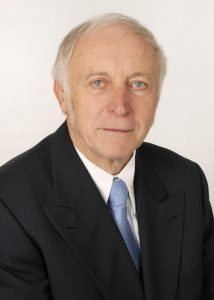
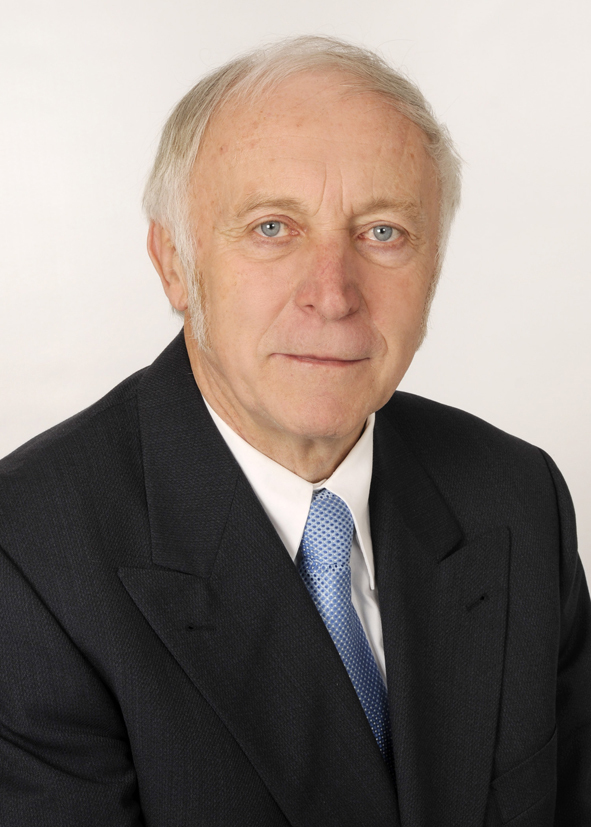
1863396  Volkmar Weiss is a German geneticist and historian. He graduated from Humboldt University of Berlin with a doctor of science degree in 1972, after presenting his dissertation on the heredity of intellectual giftedness for mathematics and technology. In 1990 he earned his postdoctoral qualification as a geneticist with the book Psychogenetik: Humangenetik in Psychologie und Psychiatrie [Psychogenetics: Human Genetics in Psychology and Psychiatry] and in 1993 as a social historian with the book Bevölkerung und soziale Mobilität: Sachsen 1550–1880 [Population and Social Mobility: Saxony 1550–1880]. He co-founded the German Social Union in 1990 and was a member of the German Christian Democratic Union from 1990 to 1993. From 1990 to 2007, he was head of the German Central Office for Genealogy.


  In 2000 he published Die IQ-Falle: Intelligenz, Sozialstruktur und Politik [The IQ Case: Intelligence, Social Structure, and Politics], which is commonly considered the German counterpoint to The Bell Curve. He has spent his retirement writing nonfiction books and alternative history novels, among them, in 2012, Die Intelligenz und ihre Feinde: Aufstieg und Niedergang der Industriegesellschaft [Intelligence and Its Enemies: The Rise and Decline of Industrial Society] and, in 2007, Das Reich Artam: Die alternative Geschichte 1941–2099 [The Reich Artam: The Alternative History 1941–2099]. In his 2010’s book Deutschland schafft sich ab [Germany Abolishes Itself], Thilo Sarrazin refers to and uses Weiss’ arguments to support his own conclusions on demographic substitution. A short actualized version of his 2012’s monograph is the book IQ Means Inequality: The Population Cycle that Drives Human History (KDP 2020).

  Grégoire Canlorbe: Against the consensual position in social sciences that interindividual differences in intelligence are exclusively molded by the membership in a given social class, you do not hesitate to present intellectual inequalities as mostly rooted in genes—and nonetheless correlated with properly social inequalities. How do you develop your subversive claim?

  Volkmar Weiss: The Communists, who came to power in 1945 in the Soviet occupation zone of Germany, started from the assumption that all social differences were based on social causes and only on them. By abolishing these causes and, first and foremost, the differences in education, one also abolishes the social differences, so orthodox communists believe. Therefore a “counter-privileged educational policy” began in East Germany. Children whose parents belonged to the intelligentsia were discriminated against, while children of workers and peasants received special support, for example in “workers and peasants faculties”. At the end of the 1950s, East Germany had managed to make considerable progress towards the goal of equal opportunities. But what happened then?

  In the 1960s, the proportion of high school graduates whose parents had once received special support after the war as children of workers and peasants and who had meanwhile become managers or members of the intelligentsia grew from year to year. In the statistics, their children no longer counted as children of workers and peasants. This was annoying and embarrassing to the representatives of the “leading working class,” and the special promotion of workers’ children was abolished in the mid-sixties. In the meantime, there was already social research in East Germany, which, since it could do nothing with such deliberately blurred categories as “working class”, had to work with clear classifications and therefore began to speak of educational strata. Empirical social research defined all university and technical college graduates (i.e. all those with an IQ above 115), regardless of their job, power or function, as members of the intelligentsia.

  Uniform school conditions not only have a homogenizing effect, but also a differentiating one and social differences are intensified. In the 1960s, in view of this development the East German power elite became more and more interested in the promotion of talents and did not longer categorically rule out the possibility of a genetic background of high IQ. In 1969 professor Hans Grimm, director of the Institute of Anthropology in Berlin (East), proposed to me to do research on the inheritance of mathematical high-giftedness. I saw myself in the footsteps of Francis Galton, agreed and received permission for this research from Margot Honecker herself, Minister of National Education.

I used the annual “Olympiads of Young Mathematicians” held in East Germany as the starting point of my investigation. In the period 1963-1971 about 2.8 million students participated in these competitions, all mentally healthy students of the grades 5-12. The registration cards of the 1329 best placed pupils and questionnaires provided data on around 20 000 relatives.

  The following empirical findings were particularly important:

  1.   In families in which the father belonged to the same top IQ occupational group as the highly gifted, all siblings of the test persons were far above average (i.e. all attended a school leading to a high school gratification certificate [German Abitur]).
  2.   In the families in which the father had a different occupation than one from the IQ top group, the siblings spread over the entire possible occupational spectrum. Approximately 14% of siblings were in jobs that generally did not require more than average mental power.
  3.   A particularly striking finding was found among the collaterals (the siblings of the parents of the highly gifted and their spouses), where both parents either belong to the top IQ occupational group or both are unskilled workers, almost always have only children who again exercise occupations of the respective qualification and thus IQ level. Parental couples in the IQ range around 110, on the other hand, have children who are spread over the entire possible occupational spectrum.

  For someone who has Mendel’s law and their statistical distributions in mind, these findings suggest the segregation of genes as the background of high IQ and high giftedness. The same effect as a major gene locus could have a series of additive alleles.

  Grégoire Canlorbe: Thirty years after the fall of the Berlin Wall, and the publication of your article on the European proletariat (in which you challenged the Marxist notion of a hereditary and disproportionately increasing proletariat), how do you assess the economic integration of Eastern Germany—and the global fate of free enterprise and laissez-faire capitalism in the reunified Federal Republic of Germany?

  Volkmar Weiss: East Germany became and remains the poor annex of the West. Up to 1989, the inhabitants of East Germany did see decades of decline. After reunification they are afraid to live again in a state whose historic fate as a whole is decline. Therefore we have in former East Germany a strong opposition against unlimited immigration.

  Grégoire Canlorbe: Relying on the logic of genetics and available knowledge on allele frequencies, you used to judge it highly probable that C2orf16 rs1919128 was the major gene locus of general cognitive ability. How did you come to endorse, then dismiss, the hypothesis?

  Volkmar Weiss: Genes underlying IQ should have a certain distribution within social strata, ethnic populations and samples of high and low IQ subjects, in 2012 this was the starting point to look into all available databases of human genes. Despite the extreme probabilities, which spoke for C2orf16 rs1919128, it was a false positive finding. Many of genes claimed to underlie schizophrenia, Alzheimer and so on are false positives.

  Another approach would have been to look for the greatest genetic differences between man and apes. On this route of research the group, led by Prof. Sikela, Denver, Colorado, found out that the number of copies of the gene DUF1220 (Olduvai) in the human genome is highly correlated with IQ and the risk to have autism or schizophrenia. High IQ subjects have about 20 copies more than low IQ persons. The number of copies has the same effect as the number of alleles of one genetic locus.

[Read more…] about A conversation with Volkmar Weiss, for American Renaissance

Filed Under: Uncategorized Tagged With: Aristotle, biological law of mass action, COVID-19, cycle of political constitutions, Eckart Knaul, Francis Galton, Friedrich Nietzsche, Grégoire Canlorbe, history cycles, Volkmar Weiss

A short conversation with James Flynn, for European Scientist

A short conversation with James Flynn, for European Scientist

by Grégoire Canlorbe · Oct 29, 2019

  maxresdefaultJames Robert Flynn is a political philosopher and an intelligence researcher based in New Zealand. He is most famous for his publications about the continued year-after-year increase of IQ scores throughout the world, which is now referred to as the Flynn Effect. His last manuscript, entitled “In Defense of Free Speech: The University as Censor,” and initially scheduled for publication in September 2019, was withdrawn by its own publisher.

  Grégoire Canlorbe: Besides your inquiries in intelligence research, you got involved in the exegesis of Aristotle’s philosophy… your very first published book developing “an Aristotelian view” on ideology in politics. What does your current polemical case for free speech owe to this Aristotelian background?

  James Flynn: I believe that I would defend free speech my debt to Aristotle aside. Any censorship turns what should be a contest of ideas into a test of strength—who has the power to shut their opponent up—and “might makes right” is hardly a principle that will maximize truth. But Aristotle was well aware that dialogue rather than authority was the proper method. He said: “Plato was a friend to us all, but an even better friend must be the truth.”

  Grégoire Canlorbe: While Aristotle’s pre-scientific physics attested to a kind of intelligence more empirical than imaginative, and more qualitative than measurement-oriented, Galilei’s intellect would exhibit qualities of speculation and inspiration, and mathematical and logico-experimental aptitudes, from which modern, properly scientific physics would spring. How would those two distinct sorts of intelligence translate into a contemporary IQ test?

  James Flynn: The current IQ tests are culturally relative in the sense that they try to measure skills appropriate in a modern scientific society. Look at the subtests of the Wechsler IQ test: (1) Vocabulary measures when you have a command of the language of a school-educated person; (2) Similarities measures whether you can use abstractions to classify and generalize as scientists do; (3) Arithmetic measures whether you are numerate; (4) Digit span measures whether you have a working memory for numbers; (5) Coding measures whether you note correlations between two systems of identification.

[Read more…] about A short conversation with James Flynn, for European Scientist

Filed Under: Uncategorized Tagged With: Aristotle, average IQ, China, Flynn effect, g factor, Grégoire Canlorbe, James Flynn, New Zealand

Copyright © 2026 · No Sidebar Pro on Genesis Framework · WordPress · Log in

  • Information
  • Privacy policy