

Part One, The Flaws of Aristotelian Hylomorphism
 Plato was manifestly a medium (similar to Pythagoras), whose thesis of the subdivision of reality into a virtual realm (inaccessible to the senses) and a concrete realm of the senses ultimately came to elucidate his privileged experience of the superior stage of reality that is the supra-sensible field; Aristotle, on the other hand, resembled much more what can be described as a sensitive. In what follows, I would like to defend a renovated version of the Platonic perspective, against the Aristotelian negation of the existence of virtual entities that Plato called “Ideas,” and which the master of Aristotle rightly identified as the model of concrete entities.
Therefore, I will argue as follows:
1) Any concrete entity partakes of an ideational model (which may be termed, “archetype,” but which, contrary to the traditional understanding of archetypes, must be deemed as the singular model of a given entity, and the model of the unique and shared traits of a given singular entity)—which configures, or determines, the layout and the composition of the aforesaid entity, and that the “matter” constituting concrete beings takes charge of its own information, except in the case of those concrete beings that are artificial.
2) Here, the ideal, or virtual realm is hierarchized: it is constituted by elementary archetypes, as well as archetypes implied by the elementary ones. Plus, the starting rules of the cosmos (as such, the laws present at the time of the Big-Bang) and the implications of such rules, the latter being incessantly iterated and complexified over the course of cosmic history.
Besides the ideal field is imbued with a possibly conscious impulse, whose object is the incarnation of the ideal realm into matter. This impulse engenders the temporal start of the material field, and therefore of the universe. Yet the ideal realm materializes itself, all the while remaining beyond matter.
3) Time occasions a process of communication between matter at the instant (T) and the actualizable properties of matter at the instant (T-1), which yields so many implications that it is possible to extract from elementary archetypes and from starting rules. Matter, within the framework of this extraction of the implications in collaboration with time, repeats in a fractal mode the starting rules of the cosmos. These consist of a handful of pairs of opposites (namely: attraction and repulsion, integration and differentiation, fission and fusion) branching (via the iteration which causes the extraction of their implications) into the laws of the cosmos.
4) The primordial unity from which the cosmos proceeds consists in the impulse on the part of the ideational field to selectively accomplish its own content into innovative matter, and the bliss for man (especially the Faustian man) lies in the knowledge of the material unfolding of the Spirit (by which I mean the ideational field taken from the angle of its unified multiplicity), and in the extension of the creative gesture of the cosmos—via science, technique, and art.
5) The atemporal movement consisting for the Spirit of actualizing (while sorting) the implications that it carries within it projects—on the walls of the metaphorical cavern of the material and temporal field—a shadow which consists in the begetting (at the level of matter and on the part of matter) of increasing levels of order and complexity. A generation nonetheless not assigned to a predetermined final state of cosmic evolution—and not kept away from randomness and from error.
Knowing the course and the laws of the cosmos that are the incarnation of the Spirit mobilize clairvoyance (that is to say, the intuition of the supra-sensible field), just as well as conjecture (and induction) from the sensible datum.
Hylomorphism faced with the emergence process
As for Aristotle’s substitution of the archetypes, from which proceed the concrete entities, with the notion that a concrete entity owes its determination to the “form” which is inherent to it, I will naturally begin by questioning the Aristotelian perspective for the benefit of the rehabilitation of archetypes.
[Read more…] about Preliminary Notes to a Renovation of Platonism — Parts One, Two, and Three
 Daryl Kane is an American politician best known for his book Cultural Cancer: Treating the Disease of Political Correctness, his podcast Right Wing Road Trip, and the journal Revenge of the Patriot whose editor he is. He runs as a Republican candidate for POTUS in 2024.
 Peter Frost is a Canadian anthropologist. His main research interest has been the role of sexual selection in highly visible human traits, notably diverse hair and eye colors. Other interests include vitamin D metabolism in northern hunting peoples and gene-culture coevolution, such as genetic pacification due to the state monopoly on violence.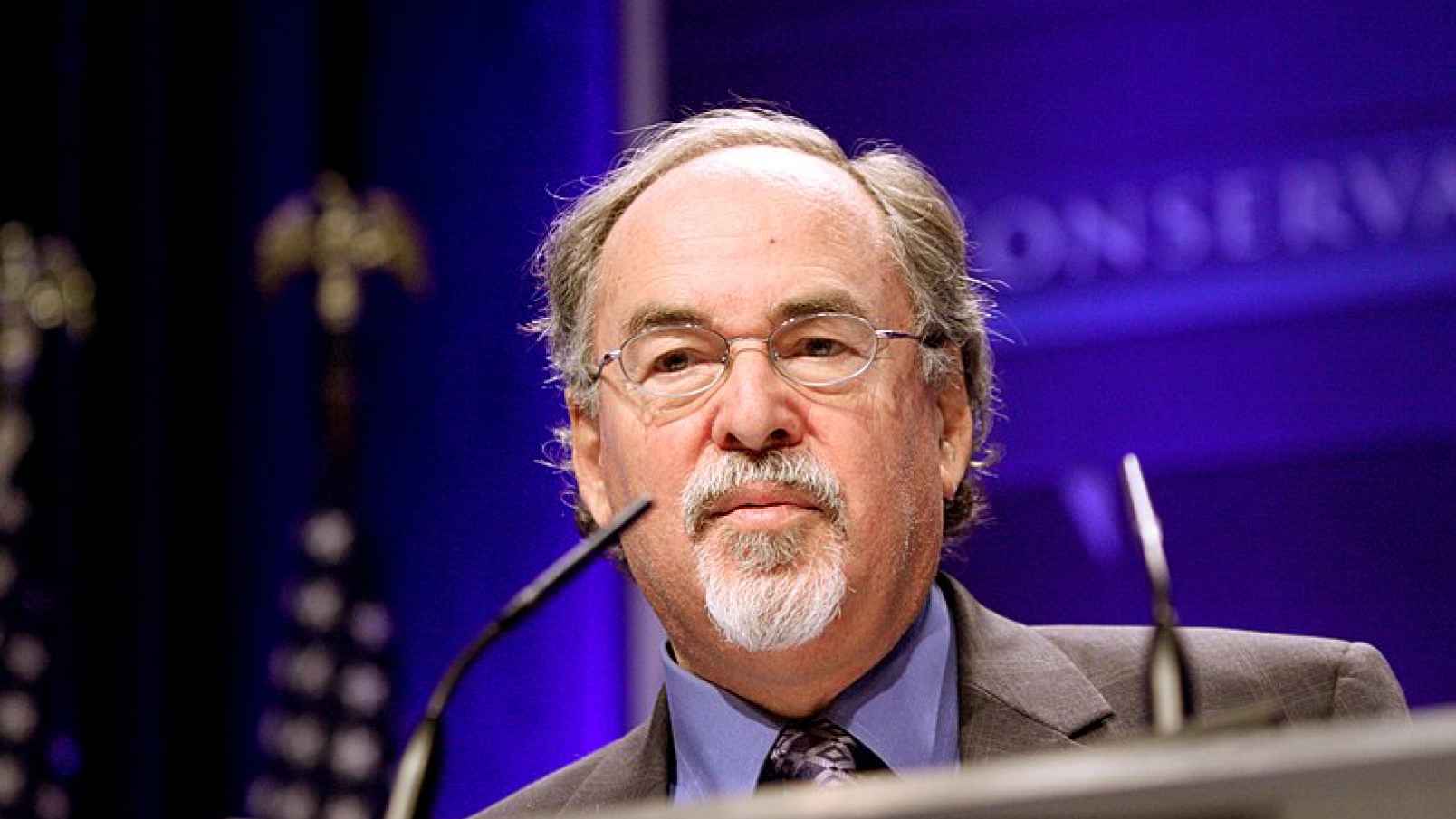
 David Joel Horowitz is an American writer. He is a founder and president of the think tank the David Horowitz Freedom Center (DHFC); editor of the Center’s publication, FrontPage Magazine; and director of Discover the Networks, a website that tracks individuals and groups on the political left. Horowitz also founded the organization Students for Academic Freedom.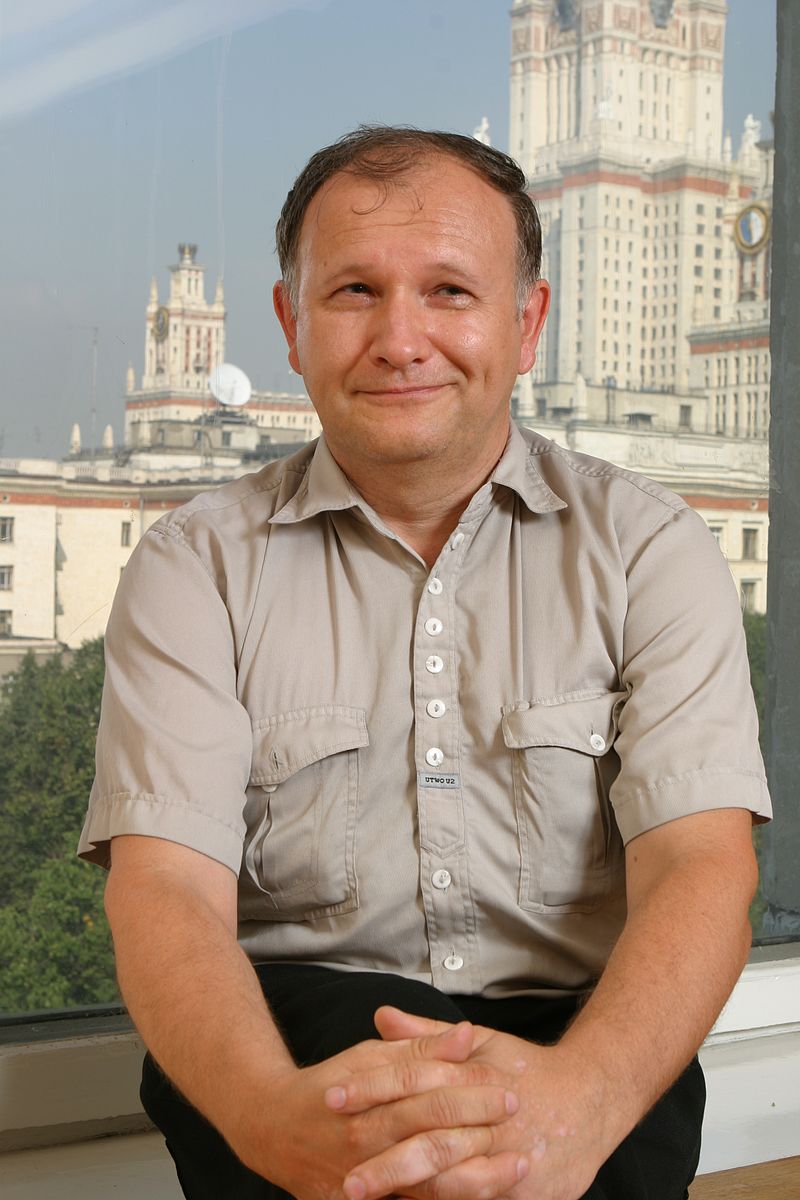
 Yuri I. Ozhigov is Professor, Chair of Quantum Informatics, Faculty VMK, Moscow State University and author of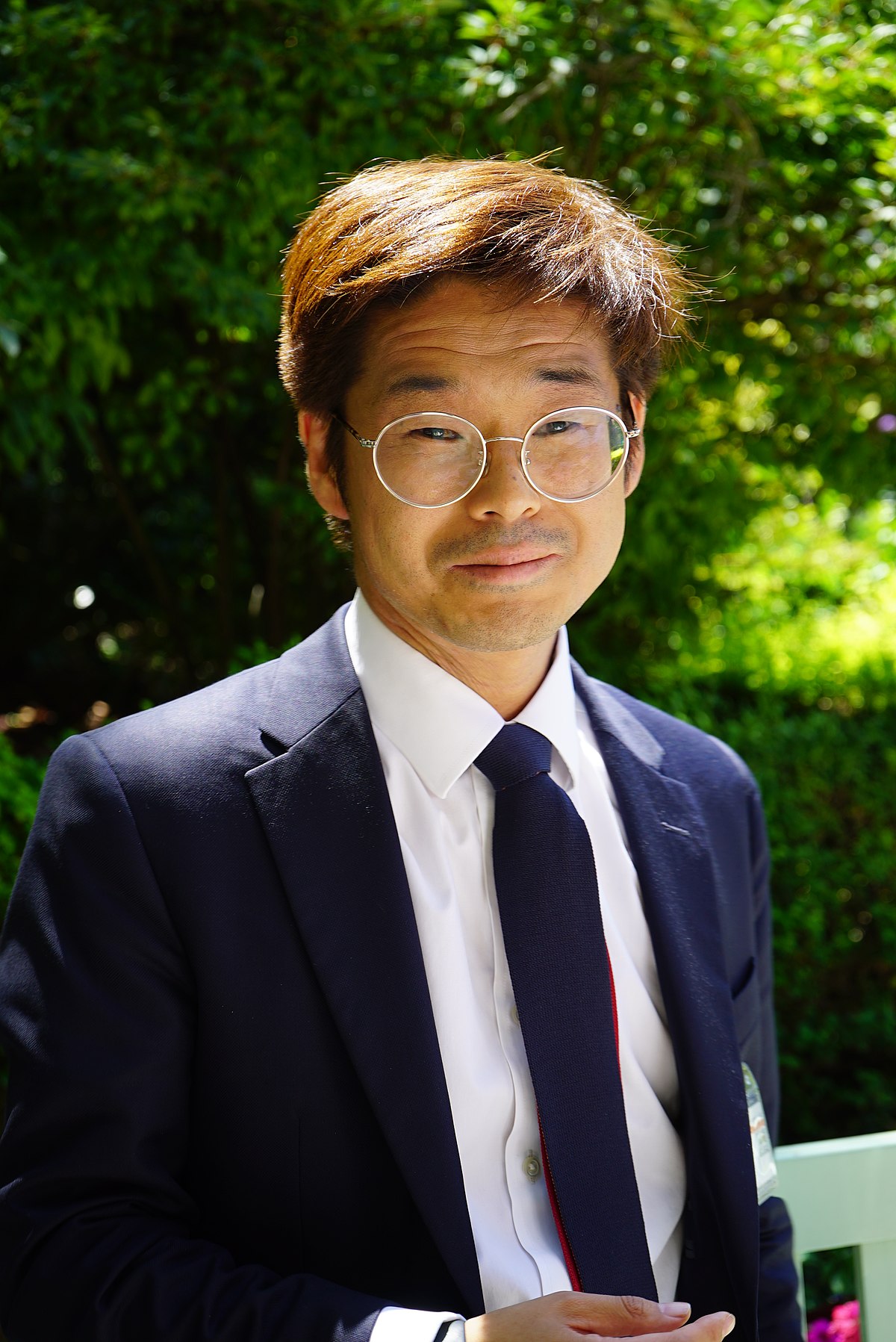
 Joachim Jean-Marie Forget, also known as Joachim Son-Forget, is a South Korean-born, French politician and professional radiologist. Since 2017, he has been a member of the French National Assembly (lower house of the French Parliament) representing French residents overseas. He works part-time as a radiologist in Switzerland. He has held Kosovar citizenship since 2018. Adopted by a French family as a child, and holder of a doctorate in cognitive neuroscience, Son-Forget was previously active within the French Socialist Party and later La République En Marche (LaREM) until he resigned from the party in late 2018. He has since founded his own political party, first called “Je suis français et européen” (JSFee), then “Valeur absolue.”
 Susan Janet Crockford is a Canadian zoologist, author, and blogger specializing in Holocene mammals. From 2004 to 2019 she was an adjunct professor in Anthropology at the University of Victoria. She is best known for her blog posts on polar bear biology, which oppose the scientific consensus that polar bears are threatened by ongoing climate change. In October 2019 she was interviewed by Grégoire Canlorbe—on behalf of the