
• Skip to content

Grégoire Canlorbe

Grégoire Canlorbe

A conversation with Laurent Alexandre, for The Council of European Canadians

A conversation with Laurent Alexandre, for The Council of European Canadians

by Grégoire Canlorbe · Août 16, 2019

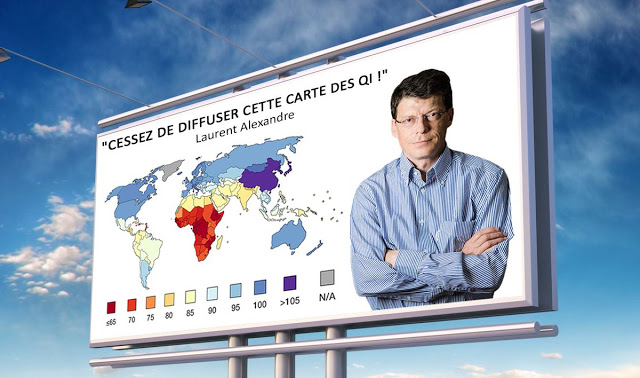
laurent-alexandre Laurent Alexandre is a French surgeon-urologist, essayist, and entrepreneur. The founder of the Doctissimo website, he is interested in the transhumanist movement and in the upheavals that humanity could experience, along with the progress of science in the field of biotechnology. His latest book is L’IA va-t-elle aussi tuer la démocratie [Will AI kill democracy as well]?
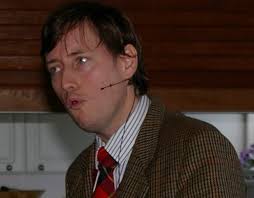
  Grégoire Canlorbe: It should be remembered that Nietzsche saw in birth control, as well as in the non-assistance of weak elements (in terms of physical or mental abilities) in our society, an unavoidable aspect of the superhuman culture which he was calling for. As a supposed transhumanist, do you regret the collapse of the eugenic movement in the 1950s?

  Laurent Alexandre: I do not believe that the 1950s are a period of decline of eugenics, they are rather a period of mutation of eugenics. When Julien Huxley invents the word “transhumanism” in 1957, it is for the purpose of creating left-wing eugenics… namely egalitarian eugenics. The 1950s did not see eugenics receding after the horrors of Nazism: they saw right-wing eugenics mutate into a leftist eugenics, dubbed “transhumanism” by Huxley.

  Grégoire Canlorbe: The alleged responsibility of human carbon emissions for contemporary warming is a subject that is conducive to raising the temperature in debates. Could you remind us of the main lines of your Promethean (or Faustian) reassessment of climate policy: namely a reassessment that does not deny the need to mitigate the greenhouse effect supposedly linked to CO2 emissions, but which attempts to conciliate climate action, the industrial and cognitive domination of nature, and materialistic enjoyment?

  Laurent Alexandre: Controlling CO2 emissions is going to be incredibly complicated. One is going to spend several very difficult decades. And if indeed, as I believe, there is a link between CO2 and climate, we will not be able to reduce CO2 emissions before 2050. We will have climate concerns probably until the end of the century.

  First of all, collapsologists overestimate the social body’s acceptance of a CO2 reduction policy. We have seen what means a tiny drop in the purchasing power of Yellow Vests to fight against the greenhouse effect: one imagines what would give a drop of 30 to 40% of the purchasing power of the lower classes. One would have a real revolution, which would probably be a far-right revolution rather than an extreme-left one in the current context. A degrowth policy will therefore be very hardly accepted… and one can see that all the polls show that the priority of the French is the purchasing power before the ecological transition.

[Read more…] about A conversation with Laurent Alexandre, for The Council of European Canadians

Filed Under: Uncategorized Tagged With: climate warming, collapsologists, eugenics, Grégoire Canlorbe, Laurent Alexandre, white Prometheanism

A conversation with Edward Dutton, for American Renaissance

A conversation with Edward Dutton, for American Renaissance

by Grégoire Canlorbe · Juil 10, 2019

Unknown  Edward Dutton is an English evolutionary anthropologist who is ‘Docent’ (Adjunct Professor) of the Anthropology of Religion at Oulu University in Finland. Dutton has a degree in Theology from Durham University and a PhD in Religious Studies from the University of Aberdeen. Dutton has notably published work on human intelligence. He has a YouTube channel on controversial scientific research called “The Jolly Heretic.”

  Grégoire Canlorbe: Should we try to do something to solve the problem of low IQ immigration—and a fortiori crossbreeding—in the West?

  Edward Dutton: It’s not up to me to make a value judgment on whether there’s too much crossbreeding between Blacks and Whites. If you are talking about the video I did on race, I’m interested in the consequences of it. Whether there’s too much of it is a much more complex question. What seems to be the case is that it’s associated with—at least, if it’s a black male and a white female—elevated levels of mental instability. So, I suppose that, based on that, a person could start to make value judgments—in terms of r strategy and K strategy.

  r strategy is that you live in an unstable ecology, but it’s an easy ecology. And so, it’s unstable, so you live fast and die young and you have as many children as you can by as many genetically fit people as you can, and within that—while we’re doing that—there’s some use for outbreeding because the genetically very different person might have some useful genes for parasite resistance or whatever that you don’t have, and so, therefore, you’d expect r-strategists to be interested in outbreeding. And r-strategists tend to have high levels of mental instability because there’s very little selection against it.

  Once you get to a K strategy, then the carrying capacity for the species is reached and then they start competing with each other, and they do this as the ecology becomes a bit more stable and more harsh. They do this by investing less energy in copulation and more energy in nurture. So they have a smaller number of children and they invest a great deal in them so they’re highly adapted to the ecology and more likely to survive the within-species competition. Now, once this happens—once you are reducing the number of people who you are having sex with and you’re reducing the number of children you have—you can maximize the extent to which you pass on your genes by selecting an optimal level of genetic similarity in your partner.

[Read more…] about A conversation with Edward Dutton, for American Renaissance

Filed Under: Uncategorized Tagged With: Aryans, Buddhism, Catholicism, Edward Dutton, Freemasonry, Grégoire Canlorbe, IQ, Life History Theory, Mongoloids, National-Socialism, Paganism, race, Shintoism

A conversation with John Christy, for Association des climato-réalistes

A conversation with John Christy, for Association des climato-réalistes

by Grégoire Canlorbe · Juin 28, 2019

johnchristy  John Raymond Christy is a climate scientist at the University of Alabama in Huntsville (UAH) whose chief interests are satellite remote sensing of global climate and global climate change. In February 2019 he was named as a member of the EPA Science Advisory Board.

  Grégoire Canlorbe: You have been at pains to show that climate models are over-predicting warming by roughly a factor of two. Could you come back to this alleged falsification?

  John Christy: We should be applying the scientific method to claims scientists (and others) are making about the climate. In this case I downloaded the output from 102 climate model simulations used by the IPCC and compared the tropospheric temperature since 1979 between the models and several observational datasets, including the satellite dataset we generate. The models on average were warming the atmosphere at a rate significantly greater than the observations. This is a test result from which we can say the models failed, and thus one shouldn’t depend on model output to characterize the future climate.

  Grégoire Canlorbe: You are notably known for your involvement—along with Roy Spencer—in devising the first successful satellite temperature record. It turns out that beforehand you had already built your “first climate datasets” at the age of twelve, “using a mechanical pencil, graph paper, and long-division (no calculators back then.)” Could you tell us more about this life of invention?

  John Christy: I was fascinated with the weather conditions around my home in the San Joaquin Valley of California (a desert basically) and the contrast with the climate of the Sierra Nevada Mountains immediately to the East. I was curious as to why some years were wet, others dry… why the Sierras had more precipitation and why the snow levels varied so much. I was the first high school student in California to write a simple program to predict the weather and to calculate the snow level in the mountains. These were very crude, statistical models in 1968, written for computers that were far less sophisticated than today’s cell phone. But, they introduced me to computer coding and to the power that was required to study. That was over 50 years ago.

[Read more…] about A conversation with John Christy, for Association des climato-réalistes

Filed Under: Uncategorized Tagged With: climate warming, CO2, Donald Trump, Grégoire Canlorbe, John Christy, neoconservative movement, Notre-Dame de Paris fire

A conversation with Richard Lynn, for American Renaissance

A conversation with Richard Lynn, for American Renaissance

by Grégoire Canlorbe · Juin 22, 2019

Richard-Lynn Richard Lynn is an English psychologist and author. A former professor emeritus of psychology at Ulster University and assistant editor of the journal Mankind Quarterly, Prof. Lynn is perhaps the world’s foremost proponent of eugenics. He is also well known for his studies of racial differences in intelligence. Many of his books have been reviewed at American Renaissance.

  Grégoire Canlorbe: When assessing both your personal and intellectual lifetime retrospectively, what may have been your equivalent of Isaac Newton’s Annus Mirabilis—namely the year 1666 when he theorized the law of universal gravitation after he allegedly saw an apple falling—; or Albert Einstein’s one… namely the year 1905 when he published his four papers in Annalen der Physik shaking the notions of space, time, mass, and energy?

  Richard Lynn: It was in 1977 when I discovered that the intelligence of the Japanese was 3 IQ points higher than that of white Americans. Hitherto, virtually all discussions of race differences in intelligence had been concerned with the problem of why white Americans and British had higher IQs than other peoples, and this was generally attributed to the tests being biased in their favor. My discovery about the Japanese set me thinking about whether other Northeast Asian peoples (Chinese and Koreans) have higher IQs that Europeans. I began collecting studies on this and found that they did.

  Grégoire Canlorbe: The 2005 review by Rushton and Jensen on race and cognitive ability had a huge impact and has now over 500 citations. What are more recent discoveries—in life history theory, cognitive psychology, sociobiology, or evolutionary anthropology—that you feel should be documented?

  Richard Lynn: I regard the most important to be what I have called “the cold winters theory” to explain the evolution of race differences in intelligence. The theory explains the relation between the IQs of the races and the coldness of the winters. Thus, the Northeast Asians had to survive the coldest winters and evolved the highest IQs (105) followed by the Europeans (100), North Africans and South Asians (84) and sub-Saharan Africans (70). I first proposed this theory in 1991 and it has become widely accepted.

  Grégoire Canlorbe: You make no secret that you worry about “dysgenic immigration” and the great replacement with which both the white race and national IQs are threatened in the West. What is the current extent of the danger?

  Richard Lynn: In 2016 Rindermann & Thompson have calculated that the intelligence of immigrants in all European countries is lower by an average 6 IQ points than that of indigenous populations. Further data confirming this conclusion for a number of economically developed countries have been reported by Woodley of Menie, Peñnaherrera-Aguire, Fernandes & Figueredo in 2017.

  It can be anticipated that in the decades that lie ahead migrants from sub-Saharan Africa will continue to try to get into Europe. There has been a huge increase of the population in sub-Saharan Africa from approximately 230 million in 1960 to approximately one billion in 2018 and it will likely continue to grow. There are high rates of unemployment and poverty throughout sub-Saharan Africa that are likely to continue and inevitably large numbers will seek a better life in Europe and many will succeed.

[Read more…] about A conversation with Richard Lynn, for American Renaissance

Filed Under: Uncategorized Tagged With: American Renaissance, Bruce Lee, dysgenic fertility, dysgenic immigration, eugenics, great replacement, Grégoire Canlorbe, Ludwig von Mises, Michael A. Woodley of Menie, Richard Lynn

A conversation with Gerhard Meisenberg, for Psych

A conversation with Gerhard Meisenberg, for Psych

by Grégoire Canlorbe · Juin 20, 2019

Gerhard Meisenberg is a retired professor of biochemistry who lives in the Caribbean island nation of Dominica. Originally from Germany, he studied at the universities of Bochum and Munich where he obtained his Ph.D. in biology. He then did biochemistry research in the United States for three years, before joining the faculty at Ross University School of Medicine in Dominica. He worked in Dominica from 1984 until the end of 2018. He became known as the senior author of a major textbook of medical biochemistry that has so far been printed in four editions. In addition, he embarked on research in educational research and psychometrics. His special interest is in secular trends of intelligence (Flynn effects), which he studied in Dominica.

  Grégoire Canlorbe: You are best known for your textbook Principles of Medical Biochemistry as well as your evolutionary psychology treatise In God’s Image: The Natural History of Intelligence and Ethics. How do you move from the former to the latter?

  Gerhard Meisenberg: Biochemistry and the study of human behavior both are part of biology, although at slightly different levels. Psychology is one step down in the “hierarchy of sciences”: more complex, and less precise. What attracted me to human behavior are the big questions about why humans are the way they are, how they got that way, and what it means for our ongoing evolution. As Theodosius Dobzhansky famously said, “Nothing in biology makes sense except in the light of evolution.” I realized that the “big picture” of human history cannot be understood without an understanding of the ongoing evolution of the value systems that determine what aims people pursue and the intelligence that determines how good they are at attaining these aims. Neither of these are etched in stone. They keep evolving, both culturally and biologically.

  Grégoire Canlorbe: A short while ago you co-wrote an article on sex differences in intelligence with Professor Richard Lynn. Could you remind us of the outlines of your perspective on this subject conducive to arousing hysteria?

  Gerhard Meisenberg: There was actually a big debate about sex differences in the journal Mankind Quarterly, where contributors exposed the different views in the field. Briefly, there are those who hold that in modern Western societies there are no sex differences in intelligence that are big enough to have any real-world importance. James Flynn defended this position. The second view is represented by Richard Lynn, who claims that boys and girls start out pretty equal, but from the age of about 15 males gain an advantage over females because their mental as well as physical growth continues to an older age. Lynn estimates that adult men score 3 to 5 IQ points higher than women, which is a very small difference. He thinks that together with a higher male standard deviation, this is sufficient to explain male dominance in many intellectual fields. Then there are those, including myself, who emphasize that males and females have different strengths and weaknesses. For example, males have an up to one standard deviation (15 IQ points) advantage in mechanical reasoning, but females come out on top in tests of emotional intelligence and of verbal and episodic memory. There isn’t a huge amount of disagreement among scientists who study these sex differences. It’s a matter of emphasis.

  Another thing to consider is that sex differences in some non-cognitive traits are much bigger than those in measured intelligence. Some aspects of vocational preferences have sex differences of at least one standard deviation, although this depends much on the way the differences are measured and analyzed. Perhaps the reason why women have lower mechanical comprehension is not that they are innately deficient in this kind of reasoning, but that they have zero interest in the workings of gears and pulleys. Therefore they never bother to develop the ability to understand these things.

[Read more…] about A conversation with Gerhard Meisenberg, for Psych

Filed Under: Uncategorized Tagged With: dysgenic fertility, Flynn effect, Gerhard Meisenberg, Grégoire Canlorbe, Islam, Kevin B. MacDonald, Psych, race differences in intelligence, Richard Lynn, sex differences in intelligence, Woodley effect

A conversation with Michael A. Woodley of Menie, Yr., for Psych

A conversation with Michael A. Woodley of Menie, Yr., for Psych

by Grégoire Canlorbe · Mai 9, 2019

1454590368-7168-0  Michael Anthony Woodley of Menie, Yr. (Younger), is a British ecologist and evolutionary psychologist, whose research on secular trends in different aspects of human intelligence has earned him considerable notability.

  Woodley of Menie received his Bachelor’s degree from Columbia University in 2007 and received his Ph.D. from Royal Holloway, University of London in 2011, where he researched the molecular genetic and community ecology of Arabidopsis thaliana, a model organism used in plant science. Since then, the focus of his research has shifted to the evolution of human intelligence and personality, and the relation of these phenomena to life history strategy.

  Woodley of Menie holds a lifetime fellowship with the Center Leo Apostel for Interdisciplinary Studies at Vrije Universiteit Brussel in Belgium, and sits on the editorial board of the journal Intelligence. He has authored over 100 papers covering a very wide range of subjects, including human intelligence and life history strategy (especially their genetic and evolutionary bases), personality psychology, comparative phylogenetic methods and primatology, cognitive epidemiology, secular trend analysis, macroeconomics, microbiology, plant science, theoretical ecology, and even cryptozoology.

  He has published four books, most recently a popular science work (co-authored with Dr. Edward Dutton) on secular trends in intelligence and their macro-social effects (At Our Wits End: Why We’re Becoming Less Intelligent and What it Means for the Future, Imprint Academic, Exeter, UK). In 2015, the Association for Psychological Science awarded Woodley of Menie the Rising Star designation for his work on secular trends in intelligence. Part of this body of research inspired the coining of the term “Woodley effect,” which refers to any trend indicating a population-level decline in general cognitive ability. His work has been covered in diverse media, including the BBC, The Telegraph, The Times, The Guardian, The Huffington Post, and RAI (Italian television).

  Grégoire Canlorbe: You have been involved in elaborating a “biological meta-theory” for the social sciences—from the perspective of “life history evolution.” Could you start by telling us more about it?

  Michael A. Woodley of Menie: First I should explain life history theory. This is a very powerful model in evolutionary ecology for explaining the covariance of anatomical, physiological, and behavioral traits within and across species. Its core idea is that environments pose particular sets of fitness challenges to organisms, which favor the evolution of coordinated suites of adaptations; these coherent adaptive packages can be understood as strategies through which organisms overcome obstacles to fitness (i.e. reproductive success). Species that tend towards very high rates of reproduction (i.e. high yields of offspring) typically have short life expectancies and their offspring tend to be precocial—meaning that they take relatively little time to mature into their adult forms. Their behaviors are also adapted to environments with generally high and unpredictable levels of extrinsic morbidity and mortality—sources of morbidity and mortality are “extrinsic” if adaptive features of organisms have little influence on them, and they are “unpredictable” if they exhibit high spatial and temporal variability that organisms cannot anticipate. The package of adaptations—behavioral, reproductive, and so on—that typically emerges in these environmental circumstances is usually called “r strategy” (where r denotes a species’ reproductive potential). Rabbits exemplify this ecological strategy—they are ready to reproduce within six weeks after birth, and the mother spends only a few minutes per day with her offspring investing resources in their growth. Rabbits also have relatively short lifespans, and in the wild have very high odds of succumbing to predation. The opposite strategy is usually called “K strategy” (where K denotes the carrying capacity of an environment). When a species is optimized for existence at the carrying capacity of its environment, its members exhibit high longevity, prolonged gestation, and extended postnatal development. The high-density populations in which K strategists live experience relatively little, or at least predictable, extrinsic morbidity and mortality. K strategists are typically long lived, in part because they invest heavily in somatic development and maintenance. With respect to behavior, K strategists are usually highly pro-social, investing in the fitness of their genetic kin via communitarian effort. Elephants exemplify this strategy, since they have relatively low rates of fertility, but invest substantially in their (small numbers of) offspring via extended gestation and multiple years of postnatal parental investment. Moreover, they are markedly herd oriented, with individual elephants exhibiting highly protective behaviors toward their entire herd when threatened by predators.

[Read more…] about A conversation with Michael A. Woodley of Menie, Yr., for Psych

Filed Under: Uncategorized Tagged With: China, Edward Dutton, Life History Theory, Michael A. Woodley of Menie, Psych, Woodley effect

Why French nationalism should embrace Judeophilia and Zionism

Why French nationalism should embrace Judeophilia and Zionism

by Grégoire Canlorbe · Avr 3, 2019

 Warning [December 2021]. Since many years, already, Grégoire Canlorbe is now totally retired from politics and no longer has any responsibility in any political party. As it stands, he has no affiliation to any political structure; and has no affiliation to any institute or ideological organization.  His ideas also have much evolved since this article, which he doesn’t endorse anymore. Canlorbe used to be a sort of neoconservative with alt-right tendencies (as exemplified with this article); but he no longer has any alt-right tendencies nor any neoconservative tendencies.

  As thorny as the issue of the Indo-European character—at a linguistic, genetic, or ideological level—of the Jewish ethnicity may be, Judaism has been decisive in edifying, and enriching, the Aryano-Christian civilization of the white race.[i] Indeed, there is little doubt that Indo-European peoples have indulged in the cultural appropriation of the sacred texts of Judaism; and that the Old Testament, its myths and its conceptions at large, has played a role in Christian Europe not less determining than the Greco-Roman heritage at large. There is also little doubt that the aristocratic-warlike ethos (which intends to design society for the benefit of aristocrats searching for individual fulfillment, and individual recognition, through their military exploits) is not only common to all Indo-European peoples, but besides, characterizes the Old Testament and the other sacred texts of Judaism.

  An example between thousands of the happy marriage between the Indo-European Weltanschauung and Judaism is that of the coronation of the kings of France, the French royalty honoring David and Solomon and seeing itself as the continuation of the kingdom of Judah: this is how the hyacinth of the mantle worn during the coronation evokes the garment of the high priest of Israel (which represents not only the nation but the universe taken as a whole); and how the future king, during the ceremony, is given a ring that symbolizes the Catholic faith, but also a scepter and a hand of justice that refers to David. Concerning the celestial mantle, various kings and emperors were using it since the Ottonians: let us mention in particular that of Henry II, preserved in Bamberg and covered with embroideries which describe situations of the Bible and celestial constellations. Recognizing himself in the music-loving character of David, Louis XIV had the painting of David playing the harp (painted by Domenico Zampieri) installed in his apartments.

[Read more…] about Why French nationalism should embrace Judeophilia and Zionism

Filed Under: Uncategorized Tagged With: aristocratic-warlike ethos, Aryans, Benjamin Netanyahu, ecology, Éliphas Lévi, empire, George Gilder, Henry de Lesquen, Indo-European tradition, Israeli-Palestinian conflict, Karim Ouchikh, Ovadia Yosef, Renaud Camus, Talmud, Temple at Jerusalem, Tomáš Sedláček, Viktor Orbán

« Previous Page
Next Page »

Copyright © 2025 · No Sidebar Pro on Genesis Framework · WordPress · Log in

  • Information
  • Privacy policy