
• Skip to content

Grégoire Canlorbe

Islam

A conversation with Guillaume Faye, for American Renaissance

A conversation with Guillaume Faye, for American Renaissance

by Grégoire Canlorbe · Août 4, 2018

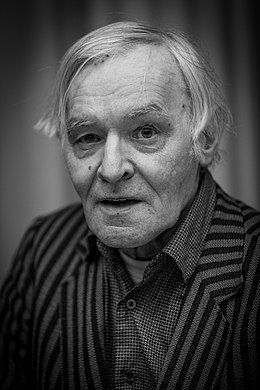
260px-Guillaume_Faye_par_Claude_Truong-Ngoc_février_2015  Guillaume Faye is a French philosopher, known for his pro-Zionism right-wing paganism, his call for a Eurosiberian Federation of white ethno-states, or his concept of archeofuturism, which involves combining traditionalist spirituality and concepts of sovereignty with the latest advances in science and technology.

  Grégoire Canlorbe: In my opinion, the liberalism [libertarianism, free-markets] of tomorrow will be a liberalism at the crossroads of Julius Evola and Filippo Tommaso Marinetti—a reconciliation that Italian Fascism basically failed to achieve. In other words, the liberalism of the future will be an archeofuturist liberalism. Do you envision France as a fertile ground for this new liberalism?

  Guillaume Faye: If one considers France from the point of view of Frédéric Bastiat, it is basically a communist country. In fact, France is today more communist than the Soviet Union ever was. It is one of the last bastions of communism in a world that is now profoundly liberal. Not only does government spending represent more than 58 percent of GDP, and redistribution expenditure more than 50 percent of GDP, but with a population that represents less than 1 percent of the world’s population, France represents 15 percent of the world’s welfare state redistribution.

  I don’t think that France will ever be a liberal country, for liberalism is quite simply incompatible with the French mentality. On the other hand, the world is increasingly liberal, but it is a liberalism that makes serious mistakes—starting with free-trade agreements biased in favor of China. That said, the trade war launched by President Trump seems to me to be a very dangerous thing, likely to trigger a whole new economic crisis far worse than that of 2008.

  As for Fascism, it was indeed a failure—were it only for its socialist economics and its warlike hubris. One can always imagine an alternative version of Fascism, the preeminent intellectual reference of which would have been Vilfredo Pareto, Julius Evola, or Filippo Tommaso Marinetti—instead of Giovanni Gentile. The fact still remains that it is impossible to change history, and that Fascism is for us only a socialist monster of the past. It is pointless to look in the rearview mirror; we need to focus on the future. And as I tried to show in my book Archeofuturism, when the historical period of the 19th and 20th centuries will have come to a close, and its egalitarian hallucinations—including a certain utopian version of liberalism—will have been sunk by catastrophe, humanity will revert to its archaic values, which are purely biological and human (i.e., anthropological).

  This will lead to the separation of sex roles; the transmission of ethnic and folk traditions, spirituality, and priestly organization; visible and structuring social hierarchies; the worship of ancestors; rites and tests of initiation; the re-establishment of organic communities—from the family to the folk. It will mean the de-individualization of marriage in that unions will be the concern of the whole community and not merely of the married couple; an end of the confusion between eroticism and conjugality; prestige of the warrior caste; inequality among social statuses—not implicit inequality, which is unjust and frustrating and is what we find today in egalitarian utopias, but explicit and ideologically legitimated inequality. It will mean duties that match rights, hence a rigorous justice that gives people a sense of responsibility; a definition of peoples—and of all established groups or bodies—as diachronic communities of destiny rather than synchronic masses of individual atoms.

  In brief, in the vast, oscillating movement of history which Nietzsche called “the eternal return of the identical,” future centuries will witness a return to these archaic values one way or another. The question for us Europeans is whether we will have these values imposed upon us, on account of our cowardliness, by Islam—as is already happening—or whether we are capable of asserting these values ourselves by drawing them from our historical memory. Alas, given the extent to which Arab-Muslim peoples have already colonized European soil, I am afraid that their re-emigration, and the liberation of France and Europe, can be set up only at the conclusion of an extremely bloody conflict.

  Grégoire Canlorbe: The Italian Renaissance is generally conceived of as a rebirth of Paganism in the formal context of Catholicism. Yet, far from being exclusively Pagan, the Renaissance was also nourished by a deep interested in Judaism. How do you explain this?

  Guillaume Faye: The Italian Renaissance was not a rebirth of paganism, but a return to the arts and techniques of ancient Rome. Not only has Italy never ceased to be pagan despite the strenuous efforts of Catholic prelates, but Graeco-Latin paganism has always found itself in osmosis with Judaism. Thus, in the pagan Roman tradition, there has never been any anti-Judaism; quite the contrary, the Jewish people was the only one authorized to practice its religion, for the good reason that Judaism was posing no political threat to Romans—unlike with the religion of the Gallic druids, who were therefore persecuted by Rome.

  Two years ago, an Italian historian published a book, Ponzio Pilato. Un enigma tra storia e memoria, [Pontius Pilate: An enigma between history and memory] in which it is shown that the Great Sanhedrin asked Romans to kill Christ because they recognized the Roman emperor as their “king,” not Jesus who let himself be called “King of the Jews.” In turn, Romans, who had no trouble with satisfying the request to kill Jesus, were absolutely delighted to hear how supportive Jews were of the emperor who had federated them. For this reason in particular, there has never been a tradition of anti-Judaism in Italy.

  Going back to the Renaissance, I subscribe to the thesis of decline developed by Bryan Ward-Perkins, an English historian living in Rome, who has shown in his book The Fall of Rome and the End of Civilization that an immense setback in technology and artistic production happened in several parts of the Roman empire, following the German invasions in the West and the Arab invasions in the East. The Renaissance was not a religious rebirth of paganism; it was an artistic rediscovery of the painting and sculpting techniques of Antiquity, while Europe had basically returned to the bronze age with the fall of the Roman empire.

  Grégoire Canlorbe: From a neo-pagan point of view like yours, why do you have more respect for Judaism than for Christianity?

  Guillaume Faye: While Christianity carries within it and unleashes a certain moral masochism of the Jewish soul, there is no call for weakness and submission, no castrating message in Talmudic Judaism. This is basically the thesis of Friedrich Nietzsche, who fiercely denounced Christianity, but also was an ardent admirer of the Jewish diaspora and a vehement opponent of anti-Semitism. “Whoever slaps you on your right cheek, turn to him the other too” has nothing to do with the Talmud. On the other hand, in preaching the socialist hatred of the rich, or the subservience of native white Europeans before North African, black African, and Asian colonizers, Pope Francis actually puts himself in harmony, and not in contradiction, with the Gospel’s teaching.

[Read more…] about A conversation with Guillaume Faye, for American Renaissance
Filed Under: Uncategorized Tagged With: empire, great replacement, Grégoire Canlorbe, Guillaume Faye, Islam, Judaism, Russia, Vilfredo Pareto

A conversation with Majid Oukacha, for Gatestone Institute

A conversation with Majid Oukacha, for Gatestone Institute

by Grégoire Canlorbe · Juin 1, 2017

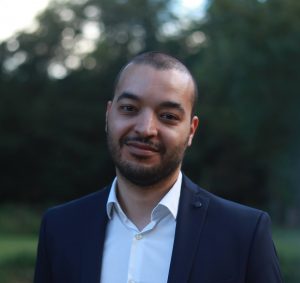
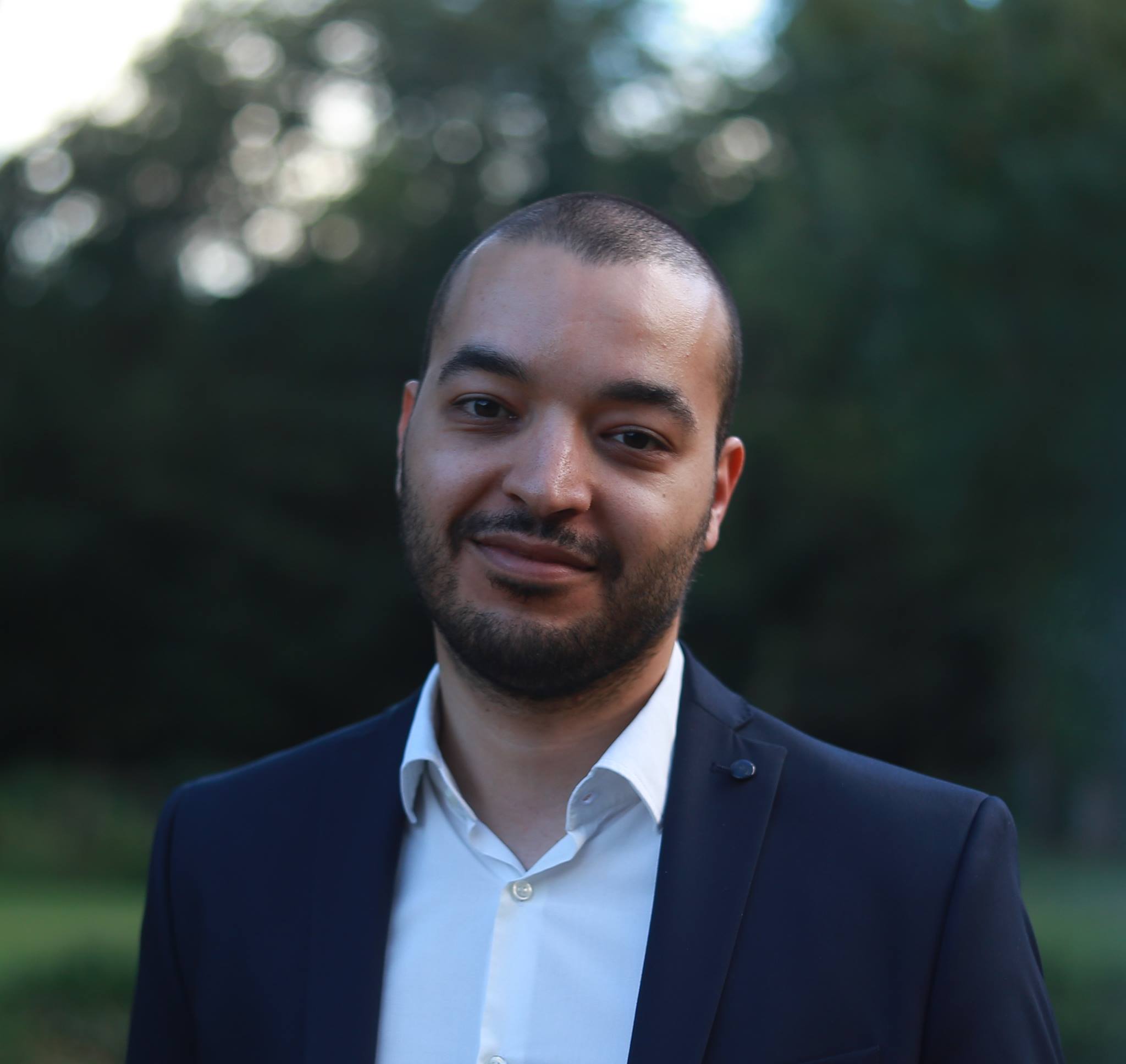
  photo Majid Oukacha HDMajid Oukacha is a young French essayist who was born and grew up in a France which he recognizes less every year. « A former Muslim but an eternal patriot, » as he sometimes likes to describe himself, he is the author of Face to Faith With Islam, a systematic critique, without value judgments, of the most inconsistent and imprecise Koranic laws.

  Grégoire Canlorbe: Could you start by reminding us of the circumstances and motives of your abandoning Islam — and of your decision to take up your pen to unravel your former religion for the public at large?

  Majid Oukacha: Like all Frenchmen who were born and grew up in France in the late twentieth century, I am fortunate to belong to a peaceful nation that allowed me to enjoy rights and freedoms for which I never personally had to fight. My parents, French citizens of Algerian origin and Muslim persuasion, provided me with a religious education, which destined me to remain a devout Muslim. They also gave me a civic, social and ethical education based on respect for France and its values, as embodied in its motto, « liberty, equality, fraternity. »

  I started going to the mosque at the age of eight. The first imam who taught me, and who came from a foreign country, had a perfect French accent, a big, cheerful smile, and he was careful never to give orders to his students outside the walls of the mosque. The courses I took quickly led me to see that what I thought was a blessing — to be born into a faith able to save me from Hell, which, according to the Koran, spares only Muslims — would also become a permanent burden.

  When one is a Muslim, every trivial action of daily life is codified, from how to drink a glass of water upon waking to how to go to bed. I submitted to Allah to avoid the torments of His wrath in the afterlife; I obeyed codified rituals that sometimes seemed a waste of time or a nonsense. My non-Muslim friends were accustomed to hearing me tell them I had to interrupt a game of football or cards to go to the mosque. There, I essentially learned to do the salat, the Muslim five-times-a-day prayers, as well as the bottomless pit of behavioral codes established as virtues by the romanticized figure of the prophet Muhammad.

  In the middle of the uniform flock — blindly imitating a distant spectrum imposing its obligations and prohibitions — I was not afraid to ask « hard » questions.

  « Why in Koranic law about the need to cut off the hand of thief (Surah 5, verse 38), does Allah not say which hand is to be cut off (the right one or the left one)? Why does He specify no minimum value for the theft from which the hand of a thief can be cut off? Stealing an apple for the first time in one’s life, does it really deserve to have a hand severed? And why does Allah not say the minimum age of a thief who must have a hand cut off? Should a 12-year-old who has never stolen before really be held as responsible as a 40-year-old repeat offender? »

  « Why should one walk seven circles around the Black Stone during the Hajj and not six or eight? What will happen if I walk around it eight times? »

  « The Prophet Muhammad explains in his Sunnah that a woman, a black dog or a donkey passing in front of a praying Muslim can cancel his prayer; but, as usual in the Sunnah, Muhammad merely advances a judgment without explaining why it should be that way. To someone who does not believe in Islam, such a statement sounds like a superstition. Why not give the intellectual journey linked to it, instead of just a dogmatic sentence? If it is Allah Himself who gave him this knowledge, why didn’t the Hadith that mentions this prophetic story become a verse of the Koran? The Koran is supposed to represent the messages of Allah which the prophet Muhammad passes on to his contemporaries to inform them about what their creator expects of them. If a woman passes one kilometer from someone who is praying, is the prayer canceled then? What is the maximum distance from which a prayer is cancelled altogether? »

  The logical « domino effect » of these questions is only a small part of the many thoughts that can, and should, keep one’s mind alert — far from the corset of indoctrination that is closed to doubt. I never heard satisfying answers to the limits of this juridical Islam to which I had always pledged allegiance, so I decided to seek them directly from Allah himself. Just before entering university, I tried to understand Islam with an unbiased look, rather than to learn it as an unquestioning believer.

  I had decided to read the entire Koran, from the first to the last sentence, and to register impressions, doubts, and questions in a notebook. Reading the Koran that way not only forced me to have to admit that almost all Islamic laws and dogmas had no scientific or rational basis, but it also highlighted that Islam, under its founder, was a misogynistic religion, preaching slavery, and an enemy of freedom of thought. I had fallen. My trust in what was both obvious and intangible had deceived me all this time. It is the libertarian and egalitarian values of secular and humanist France — which I have learned to love and respect — which gave me the strength to refuse to give in to the fear of blackmail in the form of eternal Hellfire.

  Leaving Islam confirmed my longtime fear that one day I would witness the French people lose all these freedoms and this lifestyle that make France a beloved and envied country throughout the world. All revolutions do not necessarily begin or end in a bloodbath. In a democracy, the majority has the power to make or break a revolution, away from anarchy and war. The day an Islamic majority in France will vote for a president and parliamentarians able to define for all of us what separates right from wrong, good from evil and fair from unfair, what choices then will remain for us?

  You cannot flee from problems indefinitely. You have to fight them at one time or another. I need to convince the maximum of my contemporaries that Islam is a threat to our individual rights and freedoms, and I choose to fight using words, because communication (through writing, speech) is the weapon that gives me my strength. I am, as far as I know, the only author who has made a comprehensive critical study of the principal legal and doctrinal aspects of Islam, by addressing the technical inaccuracies of the laws but without ever stating any moral or value judgment. I have no taboos so I dealt with explosive topics: slavery, pedophilia, criminalization of freedom of conscience… I think this is the most effective method to demonstrate to the widest possible audience the obscurantism and danger of Islam: a universal legislation that cannot coexist with difference.

  Grégoire Canlorbe: This objective look at the technical limitations of Koranic laws seems rare. Is it possible to do the same work with religious books from Christianity or Judaism?

  Majid Oukacha: For Muslims, every sentence in the Koran is meant to be a tale whose author is Allah Himself, the creator of the world, and who is an omnipotent, omniscient and perfect God. This God proclaims many draconian universal laws that are not limited by place or time.

  This base makes analyzing the Koran far simpler than analyzing some of the sacred texts of Judaism or Christianity. The Talmud cites original narratives and interpretations thought by humans. It is up to today’s Jews to decide whether to adhere to these passages or to question them. We can say the same of the New Testament, which is dear to Christians.

  Today, the countries where one lives best, if one is a woman or a free thinker, are precisely the countries with Christian and Jewish roots: France, the United States of America, Israel, Australia, England… These countries defend the individual freedoms of the weakest and the most varied people more than any Muslim country in the world has ever done. If a Muslim wants to criticize a misogynistic passage from the Bible or the Torah for example, good for him!

[Read more…] about A conversation with Majid Oukacha, for Gatestone Institute

Filed Under: Uncategorized Tagged With: France, Grégoire Canlorbe, Islam, Majid Oukacha

A conversation with Waleed Al-Husseini, for Gatestone Institute

A conversation with Waleed Al-Husseini, for Gatestone Institute

by Grégoire Canlorbe · Jan 25, 2017

716889-waleed-al-husseini01recadre2jpg  Waleed Al-Husseini is a Palestinan blogger and essayist as well as the founder of the Ex-Muslim Counsel of France. He garnered international fame in 2010 when he was arrested, imprisoned and tortured for articles he posted in which he criticized Islam. He has received threats and death threats. He is one of the most celebrated cyber-activists from the Arab world and now lives in France where he sought refuge. He continues to be a fierce defender of its secular, republican values.

  He is the author of an autobiography, Blasphemer! Allah’s prisons! edited by Graset in 2014 (re-issued in 2015), as well as articles in Le Monde, La Règle du jeu and Libération. His blogs are “la voie de la raison” and “I’m proud to be atheist.” Contact: hassayen@gmail.com

  Grégoire Canlorbe: Could you start by reminding us of the circumstances and motives of your dissent?

  Waleed Al-Husseini: My atheism is the result of a long quest for the truth about what I saw happening in front of me. Obviously, nobody holds all of the Truth, but during my research, I realized that religion in general, and Islam in particular, was highly incompatible with the values of human life. That was the beginning of my rejection of Islam. As time goes by, the horrors and crimes committed against mankind in the name of Islam seem to have proven me right. They have strengthened my conviction that it was the right choice to make.

  Grégoire Canlorbe: Despite being jailed, tortured, threatened, persecuted and socially pressured, you have never given up your opinions or curbed your determination to defend them. How come?

  Waleed Al-Husseini: Once I had made up my mind, I had to defend my new convictions against all sorts of pressures, whether in prison or in the street. To do so, I gathered my strength out of the weakness and archaism of the religious speech. I simply used intelligence against faith. The former opens the mind, the latter puts human beings in prison. It feels as if religious leaders practice some sort of psychological torture on their followers in order to dominate them. In Muslim societies, all the citizens live in a huge prison called Islam. I wish to remind the readers that, if I am deeply hostile to Islam as a religion, I respect Muslims as human beings and deplore the situation in which they have to survive.

  Grégoire Canlorbe: “Mahometism, writes Tocqueville in his Writings on the Koran, is the religion that has mixed both political and religious powers, and in a way that the high priest is necessarily a prince, and the prince is the high priest, and all the acts of civil and political life are ruled more or less according to religious law… This concentration and confusion established by Mahomet between both powers… was the primary cause of despotism and social immobility… which has always been a characteristic of Muslim nations.”

  Do you think that things can change? Or that Islam—and the Islamic world—cannot be reformed?

  Waleed Al-Husseini: During the genesis of Islam—which looks in many aspects like a sect—the political power relied on religion in order to control and dominate society. Subject to certain exceptions, the situation has not changed in 1,400 years.

  In his time, the prophet Mahomet had already made use and abuse of many fatwas, attributed to the angel Jibril, in order to justify what can never be justified. He awarded himself the right to rape young girls, in the name of poligamy, and used religious discourse to wage his wars, which he called “Islamic conquests”. He also committed the first war crimes in the name of Allah—upon, he claimed, divine command!

  The same methods are still common practice today, in the main Islamic countries. Iran is ruled by the Wali e-Faguih, the Supreme Leader, who claims he is “God’s vicar on Earth”. Saudi Arabia is under the rule of the “Keeper of the holy Places”. The king of Marocco is the self-proclaimed “Commander of the believers”. In the other muslim countries, the rulers call themselves Wali al–Amr, “the tutor”, a title that works as a deterrent, allowing imams to use religion in order to ban any possible objection to the tutor’s authority.

[Read more…] about A conversation with Waleed Al-Husseini, for Gatestone Institute

Filed Under: Uncategorized Tagged With: Grégoire Canlorbe, Islam, Waleed Al Husseini

« Previous Page

Copyright © 2026 · No Sidebar Pro on Genesis Framework · WordPress · Log in

  • Information
  • Privacy policy