• Skip to content

Grégoire Canlorbe

Wallonia

A conversation with Alain Destexhe, for Gatestone Institute

A conversation with Alain Destexhe, for Gatestone Institute

by Grégoire Canlorbe · Déc 19, 2025

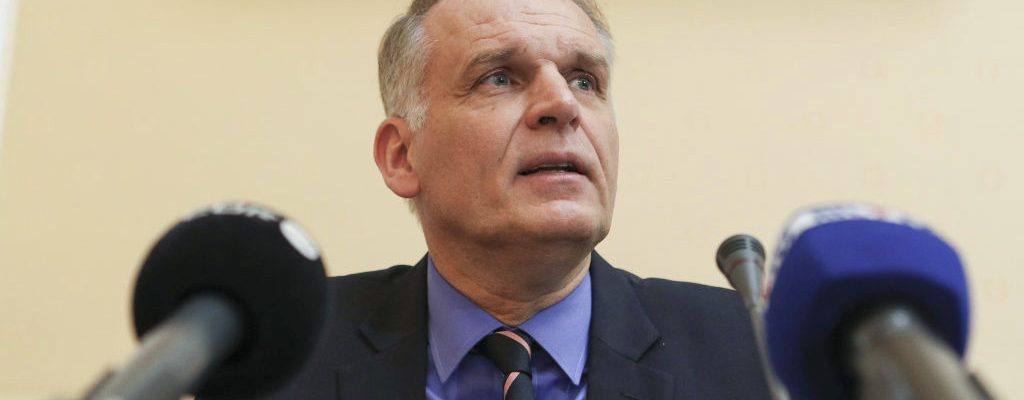
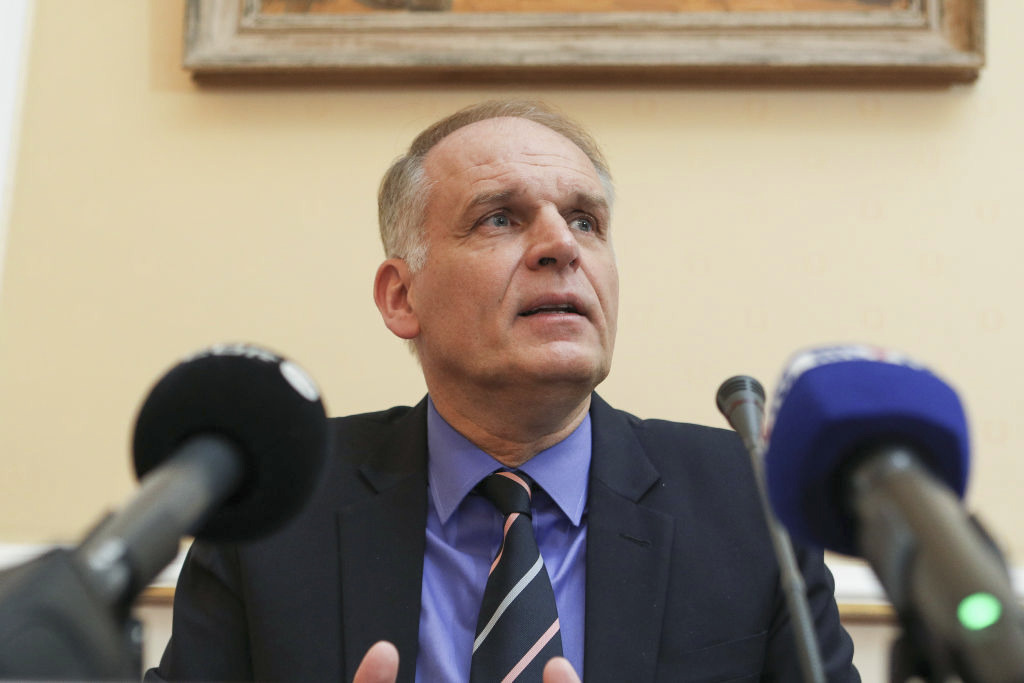
Pictured: Alain Destexhe pictured during a press conference in Brussels, Belgium, on February 20, 2019. (Photo by Paul-Henri Verlooy/AFP via Getty Images)

Alain Destexhe (MD), an honorary senator in Belgium, is a former secretary general of Médecins Sans Frontières (Doctors Without Borders), former president of the International Crisis Group, and former president of the Parliamentary Network on the World Bank & IMF. He has written 15 books on Belgian politics and international issues including Rwanda and Genocide in the Twentieth Century. He is a regular contributor to Gatestone, Le Figaro and several media outlets in France. He also practices medicine in France and overseas.

  Canlorbe: As someone who studied the genocide in Rwanda, would you say that a genocide is also underway in Gaza?

  Destexhe: A genocide targets a particular group—ethnic, racial, or religious. We can speak of genocide in Rwanda because the extermination targeted the Tutsis as a group: men, women, and children. Certainly, some Hutu opponents were also killed, but they were not targeted as members of a group.

  The legal definition of genocide is probably secondary. What matters is the political definition and the historical signification: the extermination of a group. In the Middle East, the attempts at crime against humanity for more than 70 years, have been targeted at Jews. Defending oneself by responding after a major massacre is not a genocide. If you do not want your people killed, do not attack your neighbor. The October 7, 2023 massacre itself was probably intended as a genocide if Lebanon and Iran had joined in. Israel found itself attacked for the past two years on seven fronts: Gaza, Lebanon, the West Bank, Yemen, Syria, Iraq and Iran. That looks more like a genocide. In Rwanda, all Tutsis, men, women and children had to be killed; when Hutu political opponents were targeted, their wives and children were spared. They were killed by others Hutus as political opponents, not like the Tutsis for their supposed ethnicity.

  As for Gaza, there is no genocide: there is no intention from Israel to exterminate the Palestinians, and women and children are not specifically targeted, even though there are, obviously, civilian casualties. What is targeted is the destruction of a terrorist group, Hamas, and its fighters. With the Tutsis in Rwanda, genocide is absolutely undeniable; in the case of Gaza, the accusation is totally unfounded.

  Canlorbe: Are you concerned that the Hamas attack on October 7, 2023 is a foretaste of what awaits Europeans?

  Destexhe: Yes: there exists, in a part of Islam, a fierce hostility towards the West. When Muslims become the majority in a society, it undergoes profound transformation. Other citizens—Christians, secularists, or others—then become, in a way, second-class tolerated citizens, dhimmi.

  We even see this in relatively open countries such as Malaysia or Indonesia, where it is no longer so simple today not to be Muslim. These are places where Islam tends to assert itself through sharia, the Islamic legal code, even if it is not officially applied in the country.

  Between Islamist fanaticism—that of Hamas, among others—and the West, Israel occupies a particular place in this region of the world. What the terrorists did to Israel on October 7, is just part of what radical Islam would seemingly like to extend to the West. They do not have the means to do so at the moment, but if they had, I am convinced they would act accordingly. In this regard, we are extremely naïve to think that this will not happen. For Europe, this prospect remains distant, but demographic upheavals could accelerate the threat.

  Canlorbe: Is Islam really at fault in the hatred that Islamists express towards the West? Or does religion simply serve as a pretext to legitimate a certain slant?

  Destexhe: Hard to say. I am neither an anthropologist, nor a psychologist, nor a sociologist. But yes, I believe there is what René Girard called “mimetic desire,” a wish to copy others. Overall, the populations of Belgian origin remain more affluent, as they benefit from a century of wealth accumulation: Belgian prosperity was not created overnight, it is the result of previous generations, of workers, entrepreneurs, and economic actors who enabled the prosperity of the West.

  Thus, a form of jealousy or envy might arise: an immigrant who arrives without having participated in this construction benefits from social allowances but remains, on average, less wealthy than others. Yes, I believe there is a mimetic element at play here. That is why the left constantly talks about “taxing the rich”: “I want what you have, so you should give it to me.”

  Canlorbe: You raised the correlation between the ethnic composition of the 2025 graduating class of the Faculty of Law at the Free University of Brussels and the decision of that graduating class to choose Rima Hassan, a French jurist and politician of Palestinian origin who has proposed a one-state solution to the Israeli-Palestinian conflict, as their sponsor. Do you see in this tribute to Hassan a sign of radicalism or capitulation?

  Destexhe: The reality is more complex. In the choice of Rima Hassan as class sponsor, two factors came into play. The Arab-Muslim students—to put it simply—are now extremely numerous. There seems to be an Arab-Muslim circle comprising about 8,000 members out of around 30,000 students: that is considerable. This component appears to have played a role in the choice of the graduating class.

  The radicalized European “far-left” also appears to have had an influence—it is even likely that they initiated the choice of Hassan. Overall, this choice looks as if it resulted from the conjunction of this far-left and the now very numerous Arab-Muslim students at the university.

  Canlorbe: Regarding these currents of Islam which are open to interpretation and doubt, why do they prosper so little in Western universities?

  Destexhe: Those seem to be minority currents that are sometimes persecuted by the dominant Islamic currents. I fundamentally believe that the crux of the problem lies in the idea of submission—Islam means “submission” to Allah and His Word, as stated in the Quran and the Hadiths. From there, the sacred text is no longer up for discussion. Whatever one may say, this text is quite harsh: the will to convert the entire world to Islam, apostasy punishable by death, Jews and Christians presented as dhimmis, “tolerated,” second-class citizens, or as people to be fined or converted. There is, in the very text of the Quran, a totalitarian aspect.

  Thus, a majority of Muslims can always say: “it’s written in the Quran”—meaning said by the Almighty, like the Ten Commandments in the Bible—and consider that any other reading must therefore be erroneous. It appears to me that what poses problem is the totalizing nature of the text. Since it is not permissible in the Muslim world to contest—or even to discuss—the Quran, one always returns to the letter. Apostasy is central and regarded as punishable by death. One might reply that, in practice, the implementation differs according to Muslim people; yet, for those who refer to it literally, “it is written,” thus it is The Truth.

  Canlorbe: How do you explain the hostility that most Belgian or French media have towards Israeli Prime Minister Netanyahu? It is said that Trump forced Netanyahu’s hand to reach the peace agreement and the release of the last remaining hostages still alive.

  Destexhe: I must say that this discourse leaves me perplexed. To what extent could Netanyahu have been “forced”? After all, he also wanted the hostages released, subscribed to the Trump plan and had an interest in trying to conclude the war—even though it does not seem over.

  With Israel, there always has to be a “bad guy”. The European left regrets the “good old days” of the Labor Party—Yitzhak Rabin, Shimon Peres, etc.—which coincided with the dominance of social democracy both in Europe and in Israel. It was this group that brought Israel the Oslo Accords, which only succeeded in legitimizing the Palestinian Authority and its ongoing “pay-for-slay” terrorism. For the past twenty to thirty years in Israel, Likud has become, almost continuously, the leading party in the country. Therefore, because Likud embodies the Israeli right, it is despised by the media and the Western “left” and designated as the scapegoat. It appears that these circles have never accepted that the Israeli majority has turned away from the “peace now” narrative put forth by Rabin and Peres, or that it has rejected the idea of a Palestinian state, although since the attacks of October 7, 2023, the idea of a Palestinian State next to Israel appears over for everyone.

  In this context, Netanyahu takes on the role of the “villain”, while he is, objectively, a major statesman. He holds the record for longevity as Israeli Prime Minister, and he recently led the country in a simultaneous confrontation with several actors—Iran, Hezbollah, Syria, the Houthis from Yemen, Hamas. Even if nothing is truly over in Lebanon or with Hamas, and the Houthis retain a capacity to cause harm, Netanyahu’s track record at the helm of Israel remains positive and remarkable.

  Canlorbe: What do you say in response to the discourse that assigns responsibility for October 7 to Netanyahu?

  Destexhe: That is, forgive my expression, pure bullshit. What is fundamentally reproached to Netanyahu is having tolerated Qatar’s financing of Hamas—those planes filled with cash, transiting through Israel, ended up in the pockets of the movement. Netanyahu made a misjudgment—he is not the only one—in thinking that at some point Hamas would choose peace, the development of Gaza, and renounce the war against Israel. That was a mistake, period. However, this does not mean that the policy of financial injections into Gaza was intrinsically bad: it was a bet that turned out to be lost. It was a mistake because Hamas used that money to prepare and wage war. But no one really protested, certainly not even the EU, which was aware that Hamas received funds from Qatar.

  I have been to Gaza twice, a long time ago. Gaza could resemble Tel Aviv. The territory is large enough, there is water, agricultural potential, and access to the sea. With peace, recognition of the State of Israel, and massive investments, Gaza could become prosperous. Saying that “Gaza could be Singapore” is not absurd; at the very least, let’s say Tel Aviv. Two million inhabitants is not insurmountable. But Hamas chose war and the misery of the Palestinian people, fully knowing that Israel would retaliate.

  In Gaza, the maps of the region only show one Palestinian state: Israel was not included. In reality, Palestinians, not just Hamas, have never admitted the existence of the State of Israel. The PLO continues to claim the right of return for “refugee” Palestinians to the lands of 1948, which would mean the end of the State of Israel. By the way, after 77 years, they are no longer refugees; it is the UN that perpetuates this myth.

  So I do not blame Netanyahu at all for October 7. The major failure was that of Israeli intelligence—reputed to be excellent—which saw nothing coming. The problem is having mistakenly believed, in hindsight, that Hamas could be appeased. This obviously does not make Netanyahu responsible for the attacks of October 7. That accusation is absurd.

  Canlorbe: What is your assessment of how Doctors Without Borders [MSF, Médecins Sans Frontières] engages with Hamas in the context of its humanitarian interventions in Gaza?

  Destexhe: I spent a total of twelve years at Doctors Without Borders (MSF) in various roles, and I am sad at what MSF has become. In Gaza, MSF is working with a totalitarian organization. Working in Gaza means working with—and under the control of—Hamas. Therefore, in my view, Doctors Without Borders has become complicit with Hamas throughout the war and should have withdrawn, stating: “We do not operate alongside a totalitarian movement and regime.” Hamas controls Gaza.

  This complicity of Doctors Without Borders is inexplicable—perhaps a serious mistake that calls into question the charter of neutrality and impartiality of Doctors Without Borders. Furthermore, Doctors Without Borders’ presence did not appear essential on the ground: many Arab or Muslim organizations—Turkey, Pakistan, Indonesia, other countries in the region—could send doctors, nurses, and supplies. Muslim countries are eager to help the people of Gaza. Doctors Without Borders’s added value is zero: others could do the job. Not only has the organization found itself, willingly or not, in a situation of complicity with Hamas, but it has also endorsed the idea of a “genocide.” It has echoed, almost word for word, the campaign we led in 1994 in Rwanda—“You don’t stop a genocide with doctors”—a slogan I still saw displayed recently at Doctors Without Borders’s headquarters in Brussels.

  Doctors Without Borders seems to have shifted from a neutral and independent humanitarian organization to a leftist activist organization. Gaza has not been the first signal; there were also the rescue operations in the Mediterranean, which fuel the engine of illegal immigration. Desperate people know that NGOs, including Doctors Without Borders, will pick them up at sea; despite the tragedies, the crossing remains perceived as possible, and indeed is still possible. Doctors Without Borders thus contributes to this flow towards Europe—and this is, in my view, sad and regrettable.

  It is difficult, however, to take on Doctors Without Borders: it is a sacred cow in the West. A Nobel Peace Prize laureate—which I also received, as a member of Doctors Without Borders—the organization enjoys such prestige that neither the media nor even right-wing parties dare to criticize it. The role of Hamas’s accomplice that Doctors Without Borders has played in this affair has, in my opinion, not been sufficiently highlighted.

  Canlorbe: Can we accuse Doctors Without Borders of covering for Hamas when it diverts humanitarian aid?

  Destexhe: Yes, of course: they cover everything Hamas does. They not only condone the diversion of humanitarian aid but also the conduct of the war. All Doctors Without Borders’ posts on X regarding the conflict target Israel, I have not seen one clear call for the release of hostages. However, the release of the hostages was key to ending the conflict: the war would have stopped much earlier if Hamas had agreed to release them. Doctors Without Borders did not ask for this because the organization operates under Hamas’s control: calling for the release of hostages would have risked confronting them.

  We must not forget that the Doctors Without Borders staff in Gaza is predominantly Palestinian. In a report written at the end of 2023, we showed that Doctors Without Borders members in Gaza actually celebrated the attack on October 7 and that many of them posted messages on Facebook applauding Hamas that day. Therefore, this is not just a problem of diversion of aid: it is a global complicity with what happened, and above all, an incomprehensible refusal—in my eyes—to insist on the decisive element that the release of hostages represented. They could have said: “Stop bombing civilians and release the hostages.” But no, that requirement was never emphasized. This is very serious. Unfortunately, the few criticisms—including mine—have been little publicized. Overall, if Doctors Without Borders’s image has not been tarnished by this affair, so they will not change.

  Canlorbe: Do Doctors Without Borders or other similar organizations, in your opinion, care about all persecuted or allegedly persecuted populations? Or do they, so to speak, offer humanitarian aid à la carte, which would sidestep, for example, the Uyghurs?

  Destexhe: The problem is that you first need access to the ground to be able to denounce a situation. The organization seems not to have access in China. Doctors Without Borders’s communication about Gaza is much more significant than about crises that are perhaps more serious but much less publicized, such as in Yemen or Sudan. “Palestine” has always held a special place for NGOs and the left.

  Canlorbe: Are you sympathetic to Trump’s efforts to get Russia and Ukraine to conclude a peace agreement?

  Destexhe: It is an old, wise principle in foreign policy, dear to Kissinger and Nixon, that The United States should never have as an enemy more than one nuclear power at a time. With the war in Ukraine, particularly under the Biden administration, a solid alliance has formed between Moscow and Beijing. The West, accordingly, is now in potential geopolitical confrontation with two nuclear powers. So, yes, I am sympathetic to Trump’s efforts to get a “deal” for peace in Ukraine and, from there, restore good relations between Washington and Moscow and break the alliance that has formed between Moscow and Beijing. The task, admittedly, is extremely difficult: the Russo-Chinese axis is now quite solid—although perhaps not definitive, considering a long common border, diverging demographics, and interests.

  Canlorbe: According to you, the security and sovereignty of Taiwan are of utmost importance for the West. Could you elaborate on this subject?

  Destexhe: The annexation of the island by mainland China would be a serious setback for the United States, destabilize the entire Pacific region, and undermine the trust of America’s allies. In reality, in 1895, after the Treaty of Shimonoseki, Taiwan became a Japanese colony. From 1895 to 1945, and then, from 1949 until today, Beijing has exercised no effective control over the island.

  That the 23 million inhabitants of Taiwan are treated as pariahs in international representation—without an embassy in the classic sense, without a seat at the UN, and even deprived of normal participation in the work of the World Health Organization (WHO)—constitutes a major anomaly. Among the “new Asian tigers” (excluding Australia and New Zealand), Taiwan possesses the most advanced democracy: a free press, regular elections, and political alternation since 2000 (the first direct presidential elections took place in 1996). Taiwan actually ranks alongside European countries in democratic assessments. Supporting Taiwan and its 23 million inhabitants is therefore a geopolitical, strategic, and democratic imperative.

  Taiwan is a stable state that renounced acquiring nuclear weapons in the 1970s. If Taiwan—hypothetically—had them today, Beijing’s policy would obviously be affected, and there would likely be no risk of invasion, according to the logic of “deterrence from the weak to the strong,” which General de Gaulle favored for France.

  Canlorbe: How do you assess the attitude of Belgium’s current Prime Minister, Bart De Wever, on the Ukrainian issue? It seems that De Wever, ever since his term began in February 2025, has repeatedly assured Zelensky of his support while committing to Trump to dedicate 5% of Belgium’s GDP to defense spending. De Wever recently expressed, nonetheless, his opposition to the idea of using frozen Russian assets in Belgium to finance Ukraine.

  Destexhe: I do not know what Bart De Wever thinks personally about the Ukrainian issue, but there is a constant: Belgium does not take positions that deviate from the European or Atlantic consensus because it derives significant economic advantages from hosting both the NATO headquarters and that of the European Union. In other words, its room for maneuver remains limited: it will always align with the consensus of the European Union and NATO, without distinguishing itself. In reality, Bart De Wever aligns with this line because he has little choice.

  On the issue of frozen assets, De Wever is completely right. This seizure would be illegal. Even President Roosevelt did not seize Japanese assets in the United States during World War II. The European Union is desperate because it does not have the money to finance Ukraine, and the United States no longer wants to do so. Hence this proposal to seize Russian assets. But these are primarily held in Belgium. So it is Belgium alone that would suffer an incredible shock with the withdrawal of billions in investment from Belgium—it could be regarded as a lack of confidence in the Belgian banking system. Other European countries are much less affected and, tellingly, they do not propose to seize Russian assets in their own countries! Belgium could potentially be exposed as having to reimburse the amount of the confiscated sums, and confidence in the euro would risk being permanently shaken. That proposal is simply madness, but there is nothing surprising coming from the European Commission under Ursula von der Leyen.

  Canlorbe: Brussels, which was sung about by Rimbaud and Verhaeren, now evokes less poetry. How would you summarize what has happened to the Belgian capital?

  Destexhe: It is painful for the inhabitants. A few years ago, Donald Trump caused a scandal by calling Brussels a “hellhole.” In the early 2000s, Belgium—and much of Europe—adopted a series of disastrous laws that led to uncontrolled migration flows, particularly from Muslim countries. First, tens of thousands of people were admitted, creating a powerful incentive to come to Belgium. Then came an extremely permissive family reunification policy: it was possible to bring in one’s ancestors—parents and, in fact, grandparents—as well as children from a previous marriage. This welcome mat was compounded by one of the most lenient asylum policies in Europe: obtaining status of a political refugee was relatively simple, even based on false documents and hard-to-verify humanitarian arguments. Finally, access to Belgian nationality was particularly easy: three years of residence—two for refugees—with few requirements for linguistic, cultural, or economic integration. All of this has produced a spectacular demographic transformation of the country.

  Regarding urban cleanliness, I also see a cultural dimension. Not all neighborhoods have the same problems. I often go to Rwanda; Kigali is cleaner than Brussels, so it is also a question of political will.

  Canlorbe: Does justice play its role in the face of assaults, attacks, and shootings?

  Destexhe: There is a certain “culture of excuse,” as we say in French: blaming others, avoiding responsibility, finding social roots to violence. Belgium also suffers from a lack of effective judicial tools. Unlike France, there is no immediate appearance before a judge. As a result, several months, even years, can go by between an assault and a judgment. This is a major problem because the penalty loses its effectiveness as an example. Added to this problem are prison overcrowding and insufficient prison places. In a small, densely populated country, it is difficult to build new prisons: local residents often oppose them. The result: crime is exploding in Brussels, particularly related to drug trafficking. Additionally, a situation that was once non-existent—weekly shootings—has emerged in just a few years. In Brussels, in many aspects, a general laxity has settled in. Just as there are “failed states,” Brussels is becoming a “failed city” or a “narco city”. In 2013, I wrote a small book, Brussels, A Clockwork Orange. The media mocked it. Today, statistics show that our capital is one of the three most crime-ridden cities in Europe.

  Canlorbe: Regarding restoring order in Brussels, would you support a measure equivalent to Trump’s decision to send the National Guard to Washington, Los Angeles, or Portland?

  Destexhe: No, I do not believe in such a miracle. The army could, of course, restore a certain calm in some neighborhoods, but the problem is deeper and structural. Fundamentally, it would not change much: the drift has gone too far, and with the current demographic composition of Brussels and its political fragmentation, it would be very difficult to turn back.

  Canlorbe: Could you elaborate on the situation in Mayotte, a French island in the Indian Ocean, where you worked as a doctor and which you describe in your book Mayotte: How Immigration Destroys a Society (2025) as being at the forefront of the harms caused by uncontrolled immigration?

  Destexhe: Mayotte is a French department, the department being the administrative division of France; it is the 101st, the most recent since 2011. The island has an estimated immigrant population of nearly 50%. Immigration is out of control and exploding there. The Mahoran society—French—is profoundly shaken: a climate of generalized insecurity has overtaken the place. At sunset, around 6:30 PM, the streets empty out, including in the capital, which becomes deserted—a condition that had never happened before. Public services are overwhelmed in the name of the principle of equal access: healthcare and education are offered under the same conditions to Mahorans and immigrants, leading to the saturation of health facilities and a degrading quality of services for Mahorans. Schools face the same pressure: a fourteen-year-old adolescent who arrives from Comoros or Madagascar without speaking French is placed in a class with peers his age, which lowers the overall level and places demands on the teacher to support those who are struggling. The administration is also inundated: laws—urban planning, environmental protection, turtle protection, and so on—are poorly enforced due to a lack of resources and the scale of the situation. Probably nothing can be resolved without a radical halt to migration flows. Mayotte thus experiences a harmful triptych: generalized lack of security, dislocation of cultural harmony, and exponentially deteriorating public services (healthcare, education, administration).

  What I observed in Mayotte seems, to varying degrees, already at work in Belgium. When the proportion of immigrants becomes too high, the quality of education and healthcare decreases for locals. In Brussels, for example, hospitals see thousands of patients of foreign origin, most of whom have not contributed to social security. In a saturated public system, waiting times lengthen: sometimes one has to wait more than a year, to get an appointment with a specialist. This deterioration is a consequence of mass immigration that is rarely discussed. For the Belgians, the quality of public services declines. In a way, Mayotte played the role of a forerunner for what awaits us. The trend already exists, in Brussels as in certain French cities.

  Canlorbe: Can we say that Wallonia—and, broadly, Belgium—are, in a way similar to Mayotte, a laboratory for leftist policies that are destroying Western Europe?

  Destexhe: Absolutely. Belgium—although primarily Brussels—serves as a laboratory for what Europe might face tomorrow: drug trafficking, insecurity, a weakened state, electoral clientelism, deterioration of public services, widespread dissatisfaction, housing shortages, political impotence, … All indicators show that in Brussels the national cohesion is eroding. The myth of a “Brussels citizen” who no longer exists is perpetuated: Moroccan, Turkish, Pakistani, French, Italian, Polish communities coexist along with the people of Belgian origin, who now represent only 23% of the population. Politics has been reduced to catering to fragmented communities based on religion and on national origin (Turks, Moroccans, …) and its corollary, client-ism. During elections, Turkish candidates, for example, scour the voter lists, identify Turkish names, and target only those voters.

  What do I have in common, for instance, with a Muslim woman who lives according to strict religious norms, does not work, speaks little or no French—and has never contributed to social security? This is another major issue: in hospitals, courts, and school appointments, we see people arriving with translators, due to a lack of proficiency in a national language. When looking for electoral assessors or jurors for criminal trials, many are disqualified because they do not speak either French or Dutch. Ultimately, what do we truly share with these people even if we have the same papers and political and social rights?

  There was, for me, an extremely revealing moment that the Belgian media ignored. During a Belgium-Morocco match, won by Morocco, Brussels was filled that evening with Belgian-Moroccans, most of whom had dual nationality, who were celebrating Morocco’s victory loudly. That evening, it was evident to everyone that they felt more Moroccan than Belgian. Normally, having lived for a long time, or even having been born in Belgium, they should have felt both Belgian and Moroccan; clearly, that was not the case.

  Canlorbe: Regarding the Turks settled in Belgium, particularly in Brussels, do they live according to the secular morals advocated by Atatürk for his people? Or do they, on average, turn towards Islamism?

  Destexhe: They are increasingly turning towards Islamism because they remain much more Turkish than Belgian. It is as simple as that. Atatürk’s secularism is increasingly belonging to the past, even though much of Turkish society has tried to resist Islamization. The secular policies of Atatürk persist in part of the population, but the original identity remains a major factor of belonging: a Turk will (almost) always be more Turkish than Belgian, a Moroccan more Moroccan than Belgian.

  During Turkish elections, for instance, Turks in Belgium are more likely to support Erdoğan and his Justice and Development Party [AK Party] than are voters living in Turkey, with a gap of about 10 to 20 points in favor of Erdoğan at each election. This practice also exists in France, but it is even more pronounced in Belgium—seemingly striking evidence of the primacy of original identity.

  Canlorbe: Do you still hope that Belgium will recover in the long term?

Destexhe: In politics, I act like a doctor. I start by making a diagnosis: here, population change. Then I propose a treatment: here, measures such as drastically reducing family reunification and asylum. Can we still mitigate the population change even with such strong measures? In Brussels, demographic evolution is practically irreversible, especially since the Belgian middle classes continue to leave the city: this situation is only amplifying. I still have some hope for Wallonia and Flanders.


That conversation was originally published on Gatestone Institute, in November 2025
Filed Under: Uncategorized Tagged With: 7 September attack, Alain Destexhe, Benjamin Netanyahu, Brussels, Donald Trump, Gaza, Grégoire Canlorbe, Islam, Wallonia

A conversation with Drieu Godefridi, for Gatestone Institute

A conversation with Drieu Godefridi, for Gatestone Institute

by Grégoire Canlorbe · Déc 19, 2025

Drieu Godefridi is a jurist (University Saint-Louis, University of Louvain), philosopher (University Saint-Louis, University of Louvain) and PhD in legal theory (Paris IV-Sorbonne). He is an entrepreneur, CEO of a European private education group and director of PAN Medias Group. The author of The Green Reich (2020), he is a fellow traveler of the N-VA [Nieuw-Vlaamse Alliantie—New Flemish Alliance], a conservative, nationalist party.

  Grégoire Canlorbe: You were a list leader for the conservative party N-VA in 2024 Belgian federal election. How do you sum up what this party can bring to the Belgians and, in particular, the Walloons?

  Drieu Godefridi: The N-VA’s primary strength lies in its seriousness. This is what convinced me to carry its colors in Wallonia, despite the priority objective set out in its statutes—the independence of Flanders—which actually does not evoke much enthusiasm from the Walloons. This is seriousness in the best sense of the term: the leaders of the N-VA have a perfect grasp of the workings of the Belgian system, in all its layers and details. When they propose reforms, they are not empty words.

  Belgium operates under a proportional system that requires the formation of multi-party coalitions, in the tradition of Italy, the Netherlands, or Israel, and the electoral landscape is structured into two blocs—Francophone and Dutch-speaking. Nevertheless, their program systematically addresses the major ills of Belgian political life, starting with the abyssal debt that threatens our financial balance.

  Next comes the issue of creeping Islamization, fueled by powerful Islamist networks, particularly in Brussels, and to a lesser extent in Antwerp. In my view, no Francophone party has until now offered such determination or clarity of analysis on the Islamisation of our societies and the crushing tax burden on citizens. The Reform Movement, MR, seems today to be embarking on a similar path, being a major partner of the N-VA at the federal level. The N-VA takes its inspiration from the Irish philosopher Edmund Burke and defends the market economy. 

  Belgium is virtually bankrupt; its debt and budget deficit are out of control. This is mission No. 1 for the N-VA: to get public finances back on track. The success of this mission determines everything else. 

  Canlorbe: The N-VA is reproached for lumping all Muslims together and thereby justifying all sorts of alleged persecutions against Muslims, both domestically (such as to prohibit the veil) and in foreign policy (such as supporting supposedly indiscriminate bombings in Gaza). What do you reply to those criticisms?

  Godefridi: The N-VA claims to have an inclusive nationalism, as opposed to Vlaams Belang, whose nationalism is still strongly tinged with references to the white race. There are Muslims among the members, staff and voters of the N-VA. The N-VA has never—in word, writing or deed—adopted a position of rejecting Muslims, even if the party does claim the right to criticize and reject Islam as a political doctrine—which is my position on the subject.

  Some parties that unreservedly welcome Islamists do not hesitate to accuse us of lumping Islamists together with the whole Muslim community. I am particularly thinking of the Communist Party (PTB), and Écolo—which are on the far left—and, more unfortunately, the Brussels Socialist Party (PS). For them, any criticism of Islam—which, please recall, is not a race, but a political doctrine—automatically falls into the categories of Islamophobia and racism.  Islam, as a political ideology, refers to the use of the principles, values or texts of Islam—in particular the Koran, the Sunnah and the Hadith—to structure a system of governance, laws and public policies.

  Having closely worked with the N-VA and regularly exchanged views with numerous party representatives, I have never encountered a single person who could be described as racist. This even includes controversial figures such as Theo Francken, whom Écolo had the audacity to caricature as a SS officer, which is profoundly disgraceful.

  The N-VA wants to ban the veil in public administration, and in schools—that is all. For the rest, freedom remains the order of the day. Regarding Gaza, on October 8, 2023 Bart De Wever clearly expressed his solidarity with Israel, but since then, has continued to deplore the supposed heavy-handedness of the Israelis in Gaza, even though Israel has reportedly done « more than any other military in history to minimize civilian casualties » in a place where every inch above ground  appears to have been booby-trapped for violence—including schools, UN facilities and mosques. 

  The representatives of the N-VA seem distinguished by their intelligence and their sense of state, far removed from the crude racism on the far left, where individuals are judged by the color of their skin. That is a perverse form of racism, allied with a new anti-Semitism, unfortunately, re-emerging on the left with a worrying severity. When a far-left “comedian”, Herman Brusselmans, writes that he wants to slit the throats of every Jew he meets in the street, what is funny? Is that humour or a call to murder?

  Canlorbe: Please tell us about Prime Minister Bart de Wever. What distinguishes him from—or makes him similar to—his counterparts such as Georgia Meloni in Italy, or Emmanuel Macron in France?

  Godefridi: In today’s current political landscape in Europe, one finds mostly grand speeches; Wever, coming from a small country, a small region—Flanders—embodies exceptional stature. He possesses a depth of thought. “Philosopher-king, » in his case, takes on its full meaning: a historian by training, he analyzes the field of possibilities based on a solid historical perspective, a fine knowledge of the Flemish political landscape, and a sharp sense of strategy.

  Since he became the Prime Minister of Belgium, his interventions—both in the Chamber and in the media—testify to a rare quality, both in form and substance. His moderation and sense of measure stand in contrast to the constant exaggeration observed in many parties, especially on the left. He seems to be a personality of exceptional stature at the Belgian level. 

  On the European scene, he is like Meloni. She has been criticized as “Mussolinian, » condemned for her supposed lack of competence, but she has proven to be one of the best Italian political figures of the post-war era, and is achieving remarkable results. Today, she is the preferred interlocutor of the United States in Europe. She never shows any animosity toward Ursula von der Leyen. Simply put, she is more effective. 

  The comparison with Emmanuel Macron is, alas, the opposite: welcomed with open arms by the French press and the state apparatus, which had sidelined François Fillon, his main competitor, his term has only exacerbated a decline that was already underway before he came to power. This decline, present in economic, social, and technological terms, affects all domains; France, once embodied by General de Gaulle as a visionary power at the forefront of modernity, can no longer regain its former stature. The political quagmire in which the country has been mired since the last dissolution is a sad illustration of this. Having written my thesis at the Sorbonne, it is even more painful seeing a great country sink like that.

  Canlorbe: A few days prior to Trump’s reelection, you released a Facebook video [https://www.facebook.com/drieu.philippe/videos/420568421103166] in which, along with Alain Destexhe, you confided your opinion that Trump’s return would be some good news for the Europeans. Is your hope satisfied?

  Godefridi: The good news with Trump’s return, for us Europeans, is that Trump’s return forces us finally to take on our responsibilities, whether in military, geopolitical, or economic terms. It signifies the end of a Europe that spends its time legislating for the world, creating countless regulatory cathedrals meant to govern the entire world: General Data Protection Regulation (GDPR), competition, carbon tax, GAFAs, freedom of expression (not), REACH, … All this under a constant infusion of money, directly or indirectly American, which is now obviously over. For 20 years, Europe has been under-investing in its military capabilities and relying on the American umbrella. For the past 20 years, America’s taxpayers have been funding European defense on a massive scale.

 From this perspective, Europe is sent back to its geopolitical reality—lesser than what, until recently, some European politicians may have fantasized. Europe is also sent back and to its financial and economic reality, which, unfortunately, is that of an aging continent bearing the yoke of an ideology that is a mix of extreme environmentalism and socialism, with wide-open doors to millions of Islamist newcomers. Today the main problem of Europe appears to be the European Union—apart from the Common Market, a practical necessity. European law, sadly, has become an instrument that prevents economic development.

 The cost of energy, for instance, is today three to five times higher in Europe than in most countries of the world, especially the United States. No industry can withstand such a differential for very long. The cost of this energy, however, is entirely the result of policies decided at the level of the European Union. 

  So yes, the resurgence of Trump is good news for Europe, but only in the sense that it forces Europeans finally to take their economic and military responsibilities seriously, especially now in Ukraine.

  Canlorbe: You regularly travel to Paris, Brussels, or Amsterdam for your activities as an entrepreneur. How do you assess the “business climate” there?

  Godefridi: Paris, Brussels, Amsterdam—these are cities in distress, often for the same reasons: a migratory surge and a management that is primarily socialist. Paris and Brussels are dirty, saturated with aggression, and everywhere you go you encounter asylum seekers who have been denied asylum and have no right to reside in the country but remain there nonetheless because they are supposedly “undeportable”. The police try to do their job but are constantly sabotaged by left- and far-left judges who, under various pretexts, release the worst rapists, thugs, and criminals and rapists. of all kinds, under various pretexts.  

  Admittedly, Dutch management far surpasses that of Belgium or France. In the Netherlands, public debt represents 50% of GDP, compared to 106% and 114% in Belgium and France. A country can ensure budgetary rigor and prosperity if it wants to.

  Our cities, nevertheless, like the rest of Western Europe, are buckling under the yoke of all sorts of regulations, the source of which is the European Union. There is no longer a real business climate and European law acts as an instrument of economic castration. Take energy: its cost is five to seven times higher in Europe than in the United States—no industry can sustainably withstand such a differential.

  By contrast, Switzerland remains a paradise: for the last decade, its industrial production has grown by about 40%, while that of Germany has fallen. Despite significant migration and a few small Islamist enclaves, Switzerland offers light taxation, a higher standard of living, and a commitment to the civil tradition that encourages entrepreneurship without bombarding it with countless regulations or resorting to arbitrary administrative interventions.

  My American entrepreneurs friends peer at us Western Europeans as once West Germans looked at East Germans: cousins, brothers, but on a totally opposed trajectory. With the exception of Switzerland, Western Europe is mired in economic, financial, and civilizational backwardness.   It is high time to draw inspiration from this model, without copying it servilely, to put our continent back on the path of growth, creativity, and well-being. Our challenge, of truly civilizational scope, is to restore hope—the possibility for every European family to build a better future for their children—one commensurate with Europe’s great, historical contribution to civilization.


That conversation was originally published on Gatestone Institute, in October 2025

Filed Under: Uncategorized Tagged With: Alain Destexhe, Bart De Wever, Drieu Godefridi, Emmanuel Macron, Georgia Meloni, Grégoire Canlorbe, New Flemish Alliance, Wallonia

A conversation with Claude Desama, for The Postil Magazine

A conversation with Claude Desama, for The Postil Magazine

by Grégoire Canlorbe · Juin 1, 2025

Born to a father who was a railway official and to a mother who was a textile worker, Claude Desama spent his youth in Ensival, a municipality that would merge with Verviers. His long career is both academic and political: a professor at the University of Liège, he has also served as the burgomaster of Verviers and a member of the European Parliament, as well as the president of the Commission on Energy, Research, and Technology. He is an Officer of the Legion of Honor.

  Grégoire Canlorbe: How do you transition from university teaching to European politics?

  Claude Desama: Well, in reality, my trajectory began at the university, where I became involved in scientific research in economic history. I followed the classic academic path: first assistant, then head of studies, then lecturer, and finally full professor.
  But in parallel, I have always been active in politics. From my entry into university in 1961, I enrolled in the Socialist Party, in which I immediately became involved.
  In the early 1970s, I became president of the Verviers Federation of the Socialist Party. I was then not yet 30 years old—I was born in 1942. In 1979, the first elections for the European Parliament took place. At that time, the president of the Socialist Party, André Cools, with whom I was in regular contact—I was part of the party’s think tanks—offered me the chance to be a substitute candidate. He said to me: “You are known in academic circles, it’s an interesting electorate for the left.” I accepted, and I became the second substitute. So I did not sit in 1979.
In the following elections, in 1984, I became the first substitute. The party president then was Guy Spitaels, with whom I had a very friendly and close relationship. I was one of his close advisors. That said, I had no intention of holding a political mandate at all. I wanted above all to dedicate myself to my academic career. For me, politics was a passion, almost a hobby.
  But in 1988, shortly before the end of the European legislature, a socialist MP, Anne-Marie Lizin, was appointed minister in the Belgian government. As the first substitute, I was then called to replace her in the European Parliament to complete the legislature.
  Then, in the 1989 elections, the party president asked me to be the socialist candidate. I was ranked fourth on the list, so I didn’t have much hope. But the Socialist Party achieved great success, and I got a good personal score. I therefore found myself again in the European Parliament.
 At that time, I had just been appointed full professor. I had to adjust my academic career to be able to take on this European mandate. It was certainly the one that attracted me the most, both intellectually and politically. I could have entered Belgian politics earlier, become an MP, senator, or others, but it was really Europe that fascinated me. I have always been deeply pro-European.
That’s how I chose to combine these two vocations—university and European politics—which has not always been simple or easy. But that’s how I took my first steps in the European Parliament.

  Grégoire Canlorbe: Today [April 17, 2025], Mr. Trump meets with Mrs. Meloni to discuss, among other topics, the trade relations between America and the EU. Do you think Mrs. Meloni is the most qualified to speak on behalf of the EU?

 Claude Desama: Oh! It is surely not Mrs. Meloni. She is the head of government of one of the 27 countries of the European Union, indeed, but her political party is not part of the majority in the European Parliament. This majority is composed of the European People’s Party, the socialists, and the liberals. Mrs. Meloni, on the other hand, is positioned more on the far right.
The most legitimate person—not the only one, but the best placed—to speak on behalf of Europe is obviously the president of the European Commission: Ursula von der Leyen. This is certainly one of the problems of the European Union: it is not always clear who actually represents Europe. There has been a certain rivalry in the past between Ursula von der Leyen and Charles Michel, the president of the European Council. But according to the treaties, it is indeed the president of the Commission who is the most authorized figure to speak on behalf of Europe. And today, that is Ursula von der Leyen.

  Grégoire Canlorbe: What do you think of the speech given by Mr. Vance, the American vice president, on the occasion of the Munich Security Conference? The main threat to the EU, he stated, is neither China nor Russia, but within the EU itself, the decline of certain freedoms—including free speech.

  Claude Desama: Well, I think Mr. Vance’s speech is typically populist and clearly leans toward the far right. Unlike, perhaps, Donald Trump, who seems more like a performer on the political stage—a showman, without very deep ideological convictions—the people who currently surround him, like Mr. Vance, belong to a much more pronounced populist movement.
  They are figures marked by strong nationalism, and that’s what I mean when I talk about populism: a clear orientation toward the far right. Vance’s speech was entirely in that direction.
  It is also evident that he feels more sympathy for authoritarian regimes like Russia or even China – despite the trade war that opposes them to the United States – than for democratic regimes. This affinity speaks volumes about his worldview.

  Grégoire Canlorbe: Do you approve of the Green Deal? Or do you see it as a factor in the decline of European economies?

  Claude Desama: The Green Deal represents, in my view, an important moment in European policy. The direction is good, without a doubt. But in my opinion, it has erred on the side of radicalism – and especially haste. The European economy, like most global economies, was not ready to endure an ecological transition conducted at breakneck speed.
 What was lacking was simply giving time to time. This transition should have been framed in a long-term perspective, planning efforts realistically, instead of setting rigid time-bound objectives—such as, for example, “a 50% reduction by 2030.” This is too technocratic an approach, a theoretical vision that does not sufficiently take into account economic and social realities.
We must not forget that the European economy has already been deeply shaken by the Covid-19 pandemic. It could not, in addition, abruptly absorb such a profound change in the economic paradigm.
As an economic historian, I have worked a lot on the industrial revolution. It took nearly a century for it to truly take root and become the dominant model in Europe. Indeed, there were early hotspots, like the Verviers region, but the entire process took time. I am not saying it will take a century to achieve the ecological transition, but it is certain that technological progress cannot be decreed with a mere wave of a magic wand.
  Therefore, we must accept that this transformation will take time, while preparing for the inevitable consequences of climate disruption. In short, the Green Deal is a beautiful intellectual exercise, a necessary initiative, but it lacks pragmatism. We have underestimated the time an economy needs to evolve deeply.

  Grégoire Canlorbe: Are you in favor of simultaneous denuclearization alongside abandoning fossil fuels?

  Claude Desama: I have always been in favor of nuclear energy. I think that, on this subject, we have been victims—at least in part—of a certain ideological harassment from environmentalists. Since the 1980s, they have made the fight against nuclear power the core, even the founding pillar, of their political commitment. To be honest, that was what united the different environmental sensitivities.
I can understand that, in the context of the time, their position had some rationale. Nuclear energy is indeed a so-called “dual” technology: it can be used to produce energy peacefully, but it is also related to nuclear weapons. Pacifism, which is very strong among environmentalists, naturally extended to a global opposition to any form of nuclear power. But I think that was a mistake.
Nuclear energy offers a form of energy autonomy, or at least greater independence. The fact that we renounced it, under the ideological pressure from environmentalists—and with the complacency of many media outlets that widely relayed their discourse—has been, in my opinion, a strategic error.
Europe, for its part, has also retreated on this issue, largely under the influence of Germany. After the disasters at Chernobyl and, especially, Fukushima, the Germans decided to abandon nuclear energy. They exerted significant pressure for the European Union to follow them in this direction.
Today, I believe that almost everyone recognizes that this orientation was a dead end. We lost precious years.

  Grégoire Canlorbe: If we reason in Marxist terms, what “class interest” would the petite bourgeoisie have in promoting environmentalism?

  Claude Desama: I’m not sure that it is truly in their interest to promote certain affinities observed in bourgeois or “bobo” circles—a form of adherence to power, a rigid environmentalism, or the dismantling of nuclear energy.
Since the 1980s, with the rise of neoliberal thought, we have seen a more pronounced individualism emerge, particularly within the petite bourgeoisie. Collective reflections have gradually lost their appeal, in favor of a quest for personal happiness. This social class has slowly integrated into an intellectual elite that viewed major social and industrial debates as issues of the past.
This milieu has been sensitive to questions of nature, biodiversity, and the “little birds,” as they say—a discourse that is still very frequently found in the media. Moreover, the media have amplified this trend. Who reads in-depth articles in newspapers today? It is no longer predominantly the working class or the lower classes, but rather this educated petite bourgeoisie, which has largely benefited from the democratization of higher education.
  Many have been intellectually seduced by the environmentalist message. Not necessarily out of economic interest, but rather because it was fashionable – almost a form of intellectual snobbery. At the university, I saw this up close: most of my young colleagues were environmentalists. It was in the air of the time, as it was fashionable, right after the war, to be a little left-wing, even Marxist. These are effects of intellectual trends, and I believe that environmentalism is one of them too.
That said, the environmental message contains important elements, of course. The excessive exploitation of natural resources is an undeniable fact. But today, many realize that the environmentalist ideology—its militant and dogmatic side—is sometimes disconnected from realities. It can even, in some cases, contribute to Europe’s economic stagnation.
  Take China, for example: it is one of the countries investing the most in renewable energies. But it does not stop there. It continues to develop nuclear energy; it continues to produce on a large scale. It does not let itself be guided by a utopian or overly idealized vision. And perhaps that is where the difference lies.


Grégoire Canlorbe: How do you untangle the processes that led to Verviers becoming a flagship of the industrial revolution?

  Claude Desama: Ah, you know, it is actually a conjunction of factors—a bit of chance, but also very specific contexts—that enabled Verviers to play a key role at the beginning of the industrial revolution.
As early as the 17th and 18th centuries, well before mechanization, Verviers already had a tradition in the wool industry. There were workshops of weavers, wool washers, carders… At that time, the city was an important center for the production of woven cloth.
  The Verviers manufacturers sold their products throughout Europe, and some, such as the Simonis, Peltzer, or de Biolley families, amassed significant fortunes. Thanks to their international contacts, notably in England, they discovered the first technological advances related to spinning and mechanical carding. They quickly realized that their own system, still artisanal and fragmented, had become archaic.
At the time, the model was as follows: wool was bought, often in England, washed in Verviers, then sent to the surrounding countryside where it was spun on a wheel in the farms. Then, the manufacturers would retrieve it, have it woven in small workshops, and resell the cloth. At each stage, they captured the added value, but the process remained slow, unproductive, and dependent on many uncertainties.
The discovery of spinning and carding machines opened up a new perspective for them: by installing these machines in their own workshops, they could do without rural labor, produce in much greater quantities, and industrialize the entire chain. This is how figures like Simonis and de Biolley decided to invest. They even went so far as to bring the English engineer William Cockerill to Verviers, whom they lured at great expense to set up the first modern machines. As soon as he arrived, competition followed, and a real ‘industrial market’ was established.
Very quickly, Verviers thus became a major industrial hub, supported by cutting-edge technology and the presence of significant private capital, ready to invest in innovation. This allowed the city to stay at the forefront throughout the 19th century.
Another essential factor, to which I dedicated my doctoral thesis, is the contribution of the rural population. With mechanization, the surrounding countryside lost a source of income: spinners were no longer needed. So, many young people left the land of Franchimont, the land of Herve, etc., to seek work in Verviers. This is how, from 1800-1825 onwards, large factories capable of absorbing this abundant and cheap labor were built. Young, unskilled, these workers were “available for work at all times,” as they used to say. And since Verviers had the technology, the capital, and a low-cost workforce, it became very competitive in the international market.
For a long time, Verviers’s specialization in cloth was explained by the exceptional quality of the water of the Vesdre, especially for washing wool. In reality, it was not so much the quality of the water that made the difference, but its abundance. The center of Verviers, now urbanized, was once crossed by several branches of the Vesdre. Some are still present, underground. The industrialists even built a “factory canal” that ran through the Place des Martyrs, the Rue du Collège, etc., to join the Vesdre at Hodimont. It was around this canal that the main laundries and workshops were established.
Aware of the strategic importance of water, the Verviers industrialists even pressured for the construction of the Gileppe dam at the end of the 19th century. They feared both a lack of water and increasing pollution from washing wool. This dam, which they actively supported, guaranteed them quality water, directly supplied through a piping system—a visionary project for the time.

  Grégoire Canlorbe: A writer and politician, Victor Arnould recommended that the struggle between Capital and Labor take a negotiated and harmonized form, which propels capitalism instead of leading to its overthrow. Thus, this companion of the Verviers unions wrote in 1892, in La Nation: “Yes, there is a necessity for the struggle of these two classes; but while the struggle is inevitably imposed, it must be regulated, so as not to be harmful and destructive to one of those two classes or the other. And it is for this reason that, through the representation of interests, we ask, instead of pushing for the fusion and confusion of classes, interests, and trends, that they be legally and regularly constituted facing each other, to ensure that their competition serves the common good.” Is this, in your opinion, a viable conception?

Claude Desama: This image certainly deserves to be nuanced. It is true that, compared to other industrial regions of Belgium—such as Hainaut, coal mining, or the Liège steel industry—Verviers experienced less violent social conflicts. This is largely due to the particular nature of Verviers’ trade unionism.
This unionism was first and foremost extremely powerful: it was estimated that nearly 90% of textile workers were affiliated with the union, which at the time was a single union. This near-unanimous representation gave the labor movement considerable strength—and the employers were perfectly aware of it.
But this strength was framed by union figures like Jean Roggeman, who favored dialogue and negotiation rather than direct confrontation. This does not mean that there were no conflicts. There were, sometimes severe. But the approach was different, more focused on seeking compromise.
This culture of negotiation led to a historic moment: in 1906, Verviers saw the birth of what is probably the first collective labor agreement in the world. We searched for equivalents elsewhere, notably in Europe, and there were none at that time.
  This agreement was a major social advancement. It drastically limited child and women’s labor, established a weekly day off—which was not the norm—and reduced the working day to eight hours. A remarkable success for that era.
This agreement remained in effect until 1934, at which time, in the context of the great global economic crisis triggered by the 1929 depression, employers somewhat regained control and questioned several of these gains.
In summary, one cannot speak of perfect understanding between unions and employers, but there has always been, in Verviers, a common will from both sides to favor the path of negotiation. This is what profoundly distinguishes the social history of Verviers from that of other industrial centers in the country.

  Grégoire Canlorbe: After its industrial and cultural golden age, which included prominent figures such as the poet Albert Bonjean and the painter Maurice Pirenne, what processes led to the decline of dynamism in Verviers?

  Claude Desama: The decline of Verviers began after World War II. In the immediate post-war period, there was a resurgence of activity in the textile sector, partly due to the Korean War. However, by the mid-1950s—around 1955-1960—signs of a clear economic decline had begun to appear. This decline intensified during the 1970s, which marked a true debacle for the Verviers industry: between 1970 and 1980, over 15,000 jobs were lost.
But the causes of this decline actually date back much further, to the end of the 19th century—paradoxically, a time when Verviers was still experiencing great prosperity. It was at that point that some Verviers industrialists began to prioritize the sale of yarns instead of finished cloth, believing that yarn was more profitable. They progressively shifted their production towards semi-finished products.
This strategy continued during the interwar period and then after 1945. However, by that time, the context had radically changed. Verviers producers found themselves confronted with competition that they had not previously known, particularly from synthetic fibers, often produced in Italy, which were cheaper, more varied, and better suited to modern textile uses.
  This progressive loss of competitiveness can largely be explained by two major strategic errors.
  The first: they failed to adapt. They remained focused on yarn production without redirecting their model towards higher value-added products or textile innovation.
  The second: they ceased to invest. This relates to an idea developed by the Austrian economist Joseph Schumpeter, with his theory of three generations: the first is that of pioneers, the second of developers, and the third—those who cause companies to fail—is that of heirs who spend without reinvesting. In Verviers, this third generation seems to have dominated: from the interwar period, and even more so after World War II, investments dried up. The equipment remained outdated and technologically obsolete.
 Verviers industrialists continued to spend—in other areas sometimes—but without renewing their production tools. And since the majority were family businesses, often limited financially, they failed to make the leap or respond to international competition. As a result: they disappeared one after the other.
 
  Grégoire Canlorbe: Émile Verhaeren did not lack sharp words regarding the Belgian elites, he who wrote in 1891 in La Nation that “the brains are narrowing,” “expedients replace ideas,” “skills are taken for strength,” “petty and minuscule means are touted as the only ones capable,” while “one smooths and insinuates, and arranges and mixes and everything is done halfway, three-quarters, fearfully, parsimoniously, with advances followed by retreats, with energies only in words.” Was this deleterious state of mind indeed characteristic of a certain capitalism?

Claude Desama: Verhaeren pointed out an essential issue: the predominance of family capitalism at the end of the 19th century. In his critiques, he primarily targeted the masters of forges and the industrialists in the coal sector, who relied on a model of small family businesses often inward-looking.
The situation in Verviers was somewhat different. The manufacturers from Verviers developed a specific strategy: social endogamy. In other words, they married within families of the same industrial background to consolidate and increase family capital. These marriage alliances reinforced industrial dynasties, giving rise to powerful clans—such as the Simonis, the Peltzers, or the Biolleys—with greater financial resources than coal entrepreneurs.
  This may explain why Verviers, in the long term, withstood better than other basins like the coal one. A comparable dynamic is also found in the Liège steel industry, where William Cockerill’s son was able, thanks to the capital accumulated by his family, to invest in metallurgical production.
However, by the end of the 19th century, this model of family capitalism was clearly beginning to fade. This is undoubtedly what Verhaeren sensed. At that time, a new type of capitalism was emerging, driven by banks. The creation of the Société Générale de Belgique marked a turning point: it gradually took control of the coal sector, the most fragile, and invested massively in the steel industry.
Yet, notably, this banking capitalism barely penetrated the textile sector. Why? Because the large textile industrialists—referred to as textile owners—were fiercely opposed to opening their capital. It was a distinct social class, both in Verviers and Ghent, in fact. Their refusal to associate banks with their activities isolated them and progressively weakened them. By retreating into themselves, they lost the ability to invest massively at a time when modernization became indispensable.
Therefore, one could think that if these industrialists had accepted the entry of banking capital into their sector earlier, the history of Belgian textiles would likely have been different.

  Grégoire Canlorbe: Earlier we mentioned an Austrian economist, Joseph Schumpeter. What do you think of the theory of economic cycles developed by one of his compatriots, Ludwig von Mises, a theory that locates the source of economic instability in the artificial increase of credit made possible for commercial banks by the right to lend a fraction of their deposits?

  Claude Desama: I am not sure that this is a fully developed analysis, but there is undeniably some truth in this economic reasoning. What is at stake here is the gradual financialization of capitalism. In other words, power has slowly shifted from the hands of business leaders to those of financiers, shareholders, and investors.
Today, business leaders are often themselves employees, subject to strict profitability targets. Their main mission is to generate economic performances sufficiently high to satisfy the demands of shareholders – who expect returns of 10, 12, or even 13% on their initial investment.
  It is this logic of financialization that underlies the globalization of exchanges. Not to improve the remuneration of labor, but to guarantee a better remuneration of capital. The constant pursuit of lower production costs has been to the benefit of capital, not labor.
  Is this financialization the source of economic crises? It is difficult to assert this categorically. We naturally think of the 1929 crisis, which was primarily a financial crisis, but it was not the first: stock market crashes had already occurred before. In reality, these financial crises are often the consequences of overproduction crises. And it is precisely this observation that gave rise to Keynesian thought, with its theory of investment regulation to prevent structural imbalances—particularly production excesses—that could lead to financial collapses.
Since then, the world has changed. And as the need for capital has increased, another logic has prevailed: a logic of financial profitability, increasingly disconnected from traditional productive economic logic.

  Grégoire Canlorbe: What should be done in Verviers to achieve what Donald Trump is undertaking in America: make Verviers great again?

  Claude Desama: This is a question I asked myself throughout my twelve years as mayor of Verviers: can we really revitalize this city? And I believe the answer is complex. We cannot rewrite history. Verviers certainly has some assets, but it also suffers from a major handicap: its proximity to several large metropolises.
It is too close to Liège, too close to Maastricht, too close to Aachen – all cities that are more important, which have rebuilt themselves around a modern urban fabric, essentially focused on the tertiary sector. Verviers, on the other hand, has never truly mourned its industrial past. For years, people continued to hope for a return of the textile industry. It was an illusion.
In the 1970s and 1980s, the city failed in its transition to a service economy. Many remained trapped in a paralyzing sense of nostalgia, preventing them from considering a different future. When I became mayor in 2000, I realized how much this industrial past still weighed on mindsets and hindered initiatives for tertiary development.
  Another major obstacle is precisely this proximity to Liège. The relationships between Liège and Verviers have always been tinged with rivalry, sometimes implicit, sometimes open. And since Liège had a much greater political weight, it attracted the majority of public investments and major projects. A tram was built in Liège, not in Verviers. The Calatrava train station was installed in Liège. It is symbolic but revealing.
  In twenty to thirty minutes, residents of the Verviers district can reach Liège, which offers a denser, more attractive commercial infrastructure. This makes it even more difficult for an autonomous economic hub to emerge in Verviers.
Yet, I believe there is potential in Verviers. But it is also necessary for the people of Verviers themselves to realize this and to show a bit more local pride, a certain Verviers patriotism.
  I launched a major project for a shopping center in the city center, which ultimately did not materialize. I faced virulent opposition, albeit minor but very active. Part of the population still clung to the idea of a city of small shops, without realizing that these shops once thrived thanks to the textile industry. Since its disappearance, the shopping streets—Spintay, Crapaurue, and others—have gradually emptied. The workers who frequented them, their families, have vanished with the industrial economy. That world no longer exists.
 And today, the difficulty is twofold: not only do mindsets struggle to evolve, but there is also no longer a class of Verviers investors willing to bet on the city. Those who still have the means invest elsewhere—in Liège, in Brussels, sometimes even abroad. The local economic fabric has become devitalized, and we now depend on investors from other regions, even other countries.

  Grégoire Canlorbe: What do you reply to this criticism sometimes directed at social democracy, which argues that it has the unintended effect of suspending social mobility? In other words, it would prevent the renewal of financial and business elites and close off all possibilities for today’s proletarians to become tomorrow’s powerful. Among other examples, corporate tax, above a certain threshold, would work against entrepreneurs who are starting out, who cannot afford such a tax threshold if they intend to develop, or even simply maintain, their company; conversely, established businesses would generate revenue sufficient to continue to grow (and avoid bankruptcy) despite the threshold in question.

  Claude Desama: I think this phenomenon is somewhat exaggerated. The idea that the renewal of elites would be blocked by a certain socialism – which, paradoxically, would serve the interests of an already established dominant economic class to prevent its replacement by a new one—seems questionable to me.
This refers to the so-called theory of “creative destruction,” according to which one must destroy an existing industrial fabric to rebuild a new one. But for my part, I do not really subscribe to this view. I do not see how social democracy would be responsible for any blockage.
  On the contrary, social democracy has been, in my eyes, an extremely effective model. Between 1945 and 1980, Europe—and other regions of the world—experienced exceptional economic growth, based precisely on this model. There was a balanced articulation between private capital, investors, and a strategic state, according to a logic inspired by Keynesian thought.
  It was within this framework that the foundations of what we call the welfare state were laid: social security, public services, redistribution, protection of workers. And this period was also marked by a significant reduction in social inequalities.
This model was undermined starting in the 1970s, with the two oil shocks, the breakdown of the international monetary system, but also – and above all – the ideological emergence of neoliberalism, championed by thinkers like Milton Friedman and Friedrich von Hayek. This turning point was politically embodied by Reagan in the United States and Thatcher in the United Kingdom, whose aim was clearly to dismantle the welfare state to give total freedom back to capital, hoping thus to revive the economy.
It is this shift that profoundly transformed the economic and social balances. But I do not see how social democracy, in this context, could bear any responsibility for the disappearance or stagnation of elites. On the contrary, it allowed for the rise of new social layers and an economic mobility that we struggle to find today.

Grégoire Canlorbe: How do you explain that a Belgian-style Fascism or Nazism failed to rise to power, and that Léon Degrelle did not become the homolog of Mussolini or Hitler?

  Claude Desama: In Belgium, there indeed existed a significant fascist threat. Fascism was firmly established in Flanders, particularly through the VNV (Vlaamsch Nationaal Verbond), a very influential far-right movement. In Wallonia too, the danger manifested itself, notably with the rise of the Rexist movement in certain elections.
  That said, Belgium has, it seems to me, better resisted Fascism than other European countries. This resilience can be largely explained by a peculiarity of Belgian society at the time: pillarization. This was a structuring of social life around major ideological and institutional “pillars.”
First, there was the socialist pillar, organized around the Belgian Workers’ Party, with its network of trade unions, mutual insurance societies, insurance companies, provident funds, etc. Next, the Christian (Catholic) pillar had a similar system: political parties, trade unions, youth organizations, mutual societies, schools… Finally, the Liberal Party, although somewhat more isolated, played a balancing role, sometimes allied with socialists, sometimes with Christians.
This pillar structure—although sometimes criticized—had the effect of strengthening social cohesion and providing the population with solid frameworks of support, both socially and economically or culturally. It is this dense organizational fabric that, in my opinion, allowed Belgium to better resist the seductions of fascism, as it has also been able to contain the influence of communism.

Grégoire Canlorbe: The N-VA claims to be the solution to what it describes as a Belgium caught between Wokism and Islamism. What do you respond to this political argument?

  Claude Desama: Listen, there are, in my opinion, two myths that need to be deconstructed. The first concerns this vague and overused notion of “Wokism.” Honestly, I’m not quite sure what that means. I know the theories of deconstruction, postmodern thought, the work surrounding the promotion of the subject and the critique of the limits of modernity—particularly with regard to considering the rights and realities of minorities.
  In my view, we need to distinguish this intellectual effort, which can be profound and necessary, from certain forms of excessive, even pathological activism that give a distorted image of this movement. I think, for example, of some excesses of movements like MeToo, where we slip into a form of media hysteria that ultimately undermines the cause. But reducing all of this to a singular “woke ideology” is an abusive simplification. There is not, strictly speaking, a coherent or structured woke ideology. There is a plurality of critical currents and a variety of activist struggles in favor of minorities.
The second myth concerns Islamist terrorism. We should not exaggerate. It is true that Verviers was the scene of a police operation in 2015 in a building on Rue de la Colline, where individuals linked to a terrorist cell had taken position. But there has never been a structured Islamist network in Verviers. This event was isolated and does not reflect the local reality.
What we do observe, and this is true in many European countries—in the Netherlands, Germany, France—is a growing presence of Muslim communities in the population. This is the result of immigration, but also of a more significant demographic dynamism within these communities. Some trends may lean towards a more traditional Islam, sometimes a bit rigid or closed, that is true. But to speak of an Islamist threat or a generalized risk is going much too far.
In Belgium, the vast majority of Muslims are perfectly integrated. During the twelve years I was mayor of Verviers, I had the opportunity to regularly meet with representatives of the various mosques. The exchanges were always respectful, open, and constructive. There is no structural problem in Belgium with citizens of the Muslim faith.

  Grégoire Canlorbe: During the Belgian federal elections on June 9, 2024, Mr. Godefridi represented the N-VA as the head of the list in Walloon Brabant. Do you think the N-VA has any chance of breaking through in Wallonia?

  Claude Desama: The N-VA embodies a well-known Flemish nationalism. Nationalism, it must be said, has always been present in Flanders, and the N-VA has positioned itself as its main standard-bearer. However, it is in competition with Vlaams Belang, which adopts a much more radical, even openly extremist line.
That said, the N-VA does not represent a model in any way. It is a right-wing, conservative, and strongly nationalist party. Certainly, it does not go as far as Vlaams Belang, whose tones can be described as fascist, but the N-VA remains an ideologically tough formation. However, it is representative of a significant portion of Flemish public opinion. In Wallonia, on the other hand, it has absolutely no impact, and this is for a simple reason: political traditions there are radically different.
From a cultural point of view, Wallonia and Flanders are not comparable. In Wallonia, there is no significant nationalist movement. The Walloons do not really cultivate a strong Walloon identity. In a way, this is one of their weaknesses: this lack of a strong attachment to their own collective identity. The Flemish, on the contrary, have a very developed identity consciousness.
  I remember meetings with Flemish colleagues at a time when everyone was still perfectly bilingual. Some categorically refused to hold discussions in French, even at the highest academic level. They accepted English but rejected French—which, for us, was quite surprising. This is a concrete illustration of this Flemish nationalism, which sometimes has a rigid or even domineering quality.
But it must be acknowledged that this nationalism has also had a mobilizing effect. It is partly this identity affirmation that has carried the economic conversion of Flanders after World War II. A political energy and will to succeed that the Walloons have not always been able to match, or that they did not perceive with sufficient lucidity at the time.
  That said, the N-VA has no chance of establishing itself in Wallonia. Belgium, in reality, is two worlds, two political cultures, two parallel democracies. Flemish socialists are not the same as Walloon socialists; Flemish Christian democrats are different from their Francophone counterparts. It is just as unlikely to see a party like the Walloon PS succeed in Flanders as to see the N-VA establish itself sustainably in Wallonia.

  Grégoire Canlorbe: Would you say that the people of Verviers have shown resilience in the face of the bad weather they have had to endure?

  Claude Desama: If you are referring to the floods of 2021, then yes, I can say that the people of Verviers reacted with remarkable dignity and solidarity. They showed extraordinary courage in the face of such a brutal ordeal.
What particularly struck me was the calm and resilience they demonstrated. Several people, remembering me as a former mayor, contacted me for advice or help. And each time, I was touched by their attitude: they understood what had happened, they were not looking for a scapegoat, they did not let themselves fall into anger against the political leaders—who, in this particular case, were obviously not responsible for the disaster.
  They could have been bitter or overwhelmed, but instead, they were incredibly patient and engaged in the reconstruction efforts. Their reaction inspired a lot of admiration in me.
  This shows, in my view, a true strength of character that belongs to the people of Verviers. A capacity to withstand hard knocks without losing their cool, to stick together, to keep moving forward.
Today, the city is gradually beginning to emerge from this difficult period. Even if many problems remain to be solved, one can feel that things are moving. But what I particularly remember is this collective reaction, dignified and supportive, in the face of a dramatic situation. And for that, I remain admiring.

Grégoire Canlorbe: Thank you for your time. Would you like to add a word or two for the younger generation among politicians?

 Claude Desama: I must say that I am deeply concerned about the crisis that the European left is currently experiencing, a crisis that also affects Belgium and, more specifically, Wallonia.
  It is imperative that the left finds a true “software,” a coherent thought, and a voice that can speak not only to the small intellectual bourgeoisie—its usual audience—but also, and especially, to the working classes. We must restore this essential link with those whom the socialist movement has historically defended.
This requires a genuine intellectual effort. The socialist movement must regain a doctrinal breath, a renewed vision, and a way to make a progressive project come alive today that resonates with contemporary realities. Too often in recent years, socialist parties have seemed short of reflection. I am struck by how, in the 19th and early 20th centuries, socialists—the Vandervelde, and many others—constantly nourished the doctrine, engaged in debates, and developed ideas. They thought about the world.
As for me, I have known a generation of socialists more concerned with the conquest and management of power. But the left is not just a method of management. It is above all a project for society. Once you abandon this project to settle for governing “like the right, but differently,” the left loses its soul, its identity—and its electorate.
Another problem is the growing focus on the concerns of the urban petit bourgeoisie, to the detriment of the link with the working classes. This sociological shift, combined with the loss of ideological benchmarks, largely contributes to the weakening of the left.
What I say today to socialist leaders—and I say this even more because I am still active in certain instances—is that the world has profoundly changed. The responses of the 1950s or 1960s are no longer suited to today’s challenges. We need to think of concrete solutions, propose clear alternatives, consistent with the fundamental values of socialism.   And then, there is another essential requirement: that of exemplarity. Politicians must be beyond reproach. The Romans already said: “Caesar’s wife must not be suspected.” This remains true. Exemplarity is a condition for credibility. And we must admit that in Wallonia, especially within the Socialist Party, this requirement has not always been respected. It is regrettable. And it has a real political cost.


That conversation was originally published in The Postil Magazine, in June 2025

Filed Under: Uncategorized Tagged With: Belgium, Claude Desama, Green Deal, Grégoire Canlorbe, Verviers, Wallonia

Copyright © 2026 · No Sidebar Pro on Genesis Framework · WordPress · Log in

  • Information
  • Privacy policy