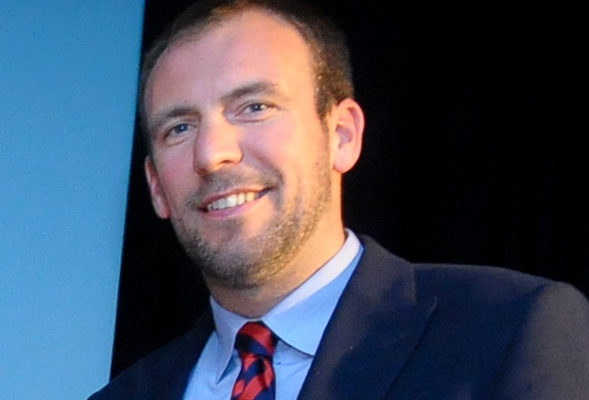

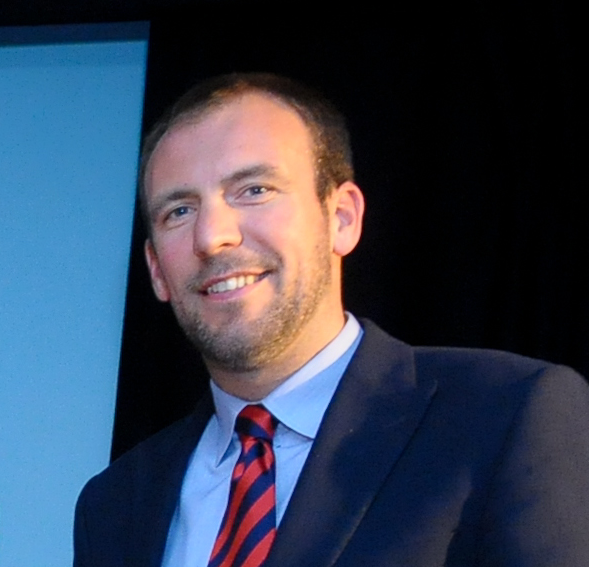
Melchior Wathelet Jr. is a Belgian lawyer and entrepreneur, former politician. After a career in the cdH as a federal deputy, then Secretary of State and Minister (Budget, Family, Environment, Energy, Mobility, then Interior), he gradually left politics in the mid-2010s. He then held several executive positions in the private sector, including as CEO of Xperthis (Zorgi) and then CCO of the NRB group, which he left before becoming the majority shareholder and co-CEO of Nexus Communication, a Liège-based company specializing in B2B communication around fleet management and mobility.
Grégoire Canlorbe: How do you move from politics to business?
Melchior Wathelet Jr.: It wasn’t “written in the stars.” I have always liked politics; I really had a great time and enjoyed it a lot. But at some point, there were a series of signals, an alignment of planets, somewhere. We were about to go into opposition, and I always said that I wouldn’t be in politics my whole life.
In politics, life doesn’t truly belong to you anymore. All these elements told me it might be good to do something else. So I left, quite simply, and decided to move more towards the business world.
I believe it is good, both in personal life and professional life, to multiply experiences. Rather than recommending it to others, I started applying it to myself.
Grégoire Canlorbe: Would you say your father has been your mentor, both in politics and in business?
Melchior Wathelet Jr.: I don’t think my father determined everything, no. Of course, as he is also in politics, he played an important role: I carry his first name, I have the same last name, we have a lot in common, and moreover, we often think the same way.
It’s clear that at the time I started, being “his son” was a huge asset. After that, it is also important to show your own touch, your own personality in continuity.
In the business world, it’s different. We talk a lot, of course, but my father was never in business. There, the relationship is more of a father-son relationship, more traditional, and not the same type of relationship as in the political world, where his experience and career helped me a lot.
Grégoire Canlorbe: Tell us about your experience within the NRB group.
Melchior Wathelet Jr.: After my work in politics, I first took over a software development company active in the healthcare sector, called Xperthis. We transformed it into Zorgi, through a series of mergers and acquisitions. Each time, these are very specific journeys, but above all, human journeys. In companies, the most fantastic – and most complicated – element is almost always the human factor: people need to understand what you want to do, they must agree with what you want to change, and at some point, they need to accept to change and evolve themselves, which is never easy. I think we truly succeeded in doing this within Xperthis/Zorgi.
Gradually, as the main shareholder, NRB needed to strengthen its teams, I became increasingly involved in the management of the group: coordinating subsidiaries, seeking synergies between them, until becoming a member of the management committee. Then I had a moment of stepping back: I no longer felt completely aligned with the company’s strategy and, moreover, several people with whom I had traveled a long way and whom I enjoyed working with were no longer there. I told myself, once again, that it was time to change my life.
All in all, I moved from politics to an appointed CEO position; from appointed CEO to consultancy; and from consultancy to buying my own company, Nexus, of which I am today the main shareholder. Each time, these are challenges in very different sectors: politics, healthcare, and IT, and now fleet management. And, each time too, in roles and functions that change profoundly.
Grégoire Canlorbe: How do you find yourself as the majority shareholder and co-CEO of Nexus Communication?
Melchior Wathelet Jr.: It’s really, once again, a story of women and men. It all started with a relationship with the former owner of the company and his wife, Caroline Thonnon and Thierry Degives.
Initially, it was just a simple shared meal, which extended into a bar, then into another restaurant where the discussion went further. Little by little, the conjunction of our positions and mutual interests brought forth an obvious conclusion: we wanted to work together, and they wanted someone to take over the company.
I wasn’t actively looking at that moment; I wasn’t in that mindset. But the opportunity arose, and I seized it.
Grégoire Canlorbe: What development strategies do you have in mind for the company?
Melchior Wathelet Jr.: I would say there are several things.
The first is that today we are at the heart of a sector, fleet management—the management of automobile fleets and light commercial vehicles—which is undergoing profound questioning.
Why? Because of the electrification, sustainability issues, cost pressures, and a changing mobility landscape: we are gradually transitioning from a car ownership mindset to a broader mobility mindset. Added to this are shifting taxation and regulations, which vary and are sometimes difficult to follow depending on the country, the emergence of new players like Chinese manufacturers, and everything related to telematics and embedded IT. We now have data that we didn’t have before, which needs to be collected, managed, and made useful.
Fleet managers, who are somewhat the buyers within companies, are continuously confronted with manufacturers seeking their new relationship model, leasing companies reorganizing, and telematics players reinventing themselves. All of this creates an enormous need for optimization and support in a sector and community that are truly at a turning point.
Fundamentally, our role is to help this community. How? In several ways.
First, by strengthening and evolving our various platforms: IT tools, communication channels, media, events, content production… All of this needs to continue to develop, with an increasing role for technology and artificial intelligence.
Next, by massively reinvesting in the educational aspect: how to better train, better share expertise, and uplift the skills within the fleet management ecosystem.
Finally, by continuing our geographical and sectoral development. In Europe, we are already very well positioned in a very mature market. We have invested in the Asia-Pacific region, in Latin America, and we must continue: this year, for example, we are returning to Turkey, and we are also expanding our community to include everything related to the second life of vehicles.
We remain a small structure; we are not a multinational with unlimited resources. But thanks to the quality of our work, our credibility, our independence, and our expertise, we are truly able to grow and provide new perspectives for Nexus.
Grégoire Canlorbe: You are the president, if I’m not mistaken, of the Spa-Francorchamps circuit.
Melchior Wathelet Jr.: It’s a position I accepted as a great motorsport enthusiast. In 2017, when they were looking for a president for the circuit and for F1 in Belgium, they wanted someone with a certain knowledge of the political world but who was no longer in politics, someone who speaks several languages and is interested in the business of motorsport.
I was therefore offered the presidency of both structures, which I accepted with immense pleasure and that I continue to assume today. Concretely, this means that a good part of my weekends is now rhythmically filled with motorsport, which is quite pleasant when you can link one of your passions to a professional activity.
I remain president, so I’m somewhat withdrawn on a daily basis, but I try to support the teams. And I must say that the teams of the circuit and F1 are doing an exceptional job: energizing the circuit, optimizing its business model, enhancing its visibility in the region… We are really in an extremely positive dynamic.
Grégoire Canlorbe: How do you promote the circuit to the American public and, generally, to foreigners?
Melchior Wathelet Jr.: I think there is first an essential element, which, in the end, we don’t have much to do with: Spa-Francorchamps is, very clearly, the most beautiful circuit in the world. No one disputes it. It belongs to the mythical circuits, but this one is particularly so, and its beauty is a huge asset that allows us to be both strong and recognized.
Beyond this status as the most beautiful circuit, there is mainly the evolution it has undergone. In terms of attractiveness for the public, entertainment, safety, quality of food and service, shops and merchandising, infrastructures in general, the circuit has made tremendous progress in recent years. As I often say: we have always been the most beautiful, and that is something no one has ever taken from us. It’s an enormous advantage. But today, in addition to being the most beautiful, we are also among the best because we have been able to evolve across all the dimensions that a modern circuit must offer while capitalizing on our mythical side, this jewel that we must cherish.
When I say that it’s the most beautiful, it’s not just Belgian chauvinism: it’s also the opinion of the majority of Formula 1 drivers, which I think is quite a serious criterion. Of course, beauty has an element of irrationality, and I willingly acknowledge that other mythical circuits like Silverstone, Suzuka, Monza, or Monaco are magnificent. But what makes these circuits mythical—and ours perhaps even a little more so—is primarily their history. They are tracks that have existed since the beginning, that carry within them the very DNA of motor racing.
Spa also has the luck of being nestled in the heart of a beautiful, hilly region, with elevation changes, changes in rhythm, and uncertain weather that adds an element of unpredictability. It’s a circuit that can be a bit frightening: it is demanding, potentially dangerous, on the edge, and you must know how to juggle all these parameters to win there.
And then, we have the most beautiful corner in the world: the Raidillon. When, in Brad Pitt’s latest film, he has to name a corner to illustrate just how audacious you have to be to be a Formula 1 driver, he chooses only one, and it’s ours. This corner concentrates a part of the myth of Spa: that’s also why, at its core, our circuit is the most beautiful.
Grégoire Canlorbe: What are your other favorite circuits?
Melchior Wathelet Jr.: Obviously, Monza: I was fortunate enough to witness a Ferrari victory there once. The combination of Italy–Monza–“temple of speed”–Ferrari is simply legendary.
Silverstone as well, of course: the love of the English for motorsport is completely crazy, almost delirious, and absolutely exceptional. It is an immense privilege to have been there.
And then, perhaps the one that, in terms of design, curves, and pure layout, is the most exceptional in my eyes: Suzuka. It is also where Senna built a large part of his legend.
We very often associate the magic of circuits with stories, with specific moments. That’s why historical circuits always maintain this additional dimension, this specificity that sets them apart.
Grégoire Canlorbe: Thank you for your time. What, in your opinion, should be the avenues to explore to make Wallonia more attractive to investors?
Melchior Wathelet Jr.: This is obviously a vast question and a real debate, extremely broad.
Today, it is clear that Wallonia suffers from a deficit, whether in terms of attractiveness, workforce, or image. There is a real need to regain pride, to dare more investment, venture capital, to accept that there can be failures, while maintaining a capacity for self-criticism and questioning what needs to be questioned.
We are facing a very complicated financial situation, with significant unemployment and attractiveness challenges. Therefore, in terms of mindset, we need to regain not only the pride that is still lacking, but also a more assertive ambition and a capacity to invest that is not sufficiently present.
So far, we have mainly acted through subsidies and public support. I believe there are many other levers to activate: reducing administrative burdens, adapting public procurement rules, improving the status of research and innovation… All these avenues can, beyond the question of mindset, increase the investment and innovation capacity of companies. And we have a vital need for this because if we want to recreate wealth, it will primarily pass through the economy; there are not thirty-six thousand solutions. Therefore, for me, we need to combine two dimensions: a resurgence of pride, attitude, ambition, and in parallel, a series of very concrete measures. These measures exist; we just need the courage to implement them.
That conversation was originally published in The Postil Magazine, in January 2026